Friday, March 17, 2017

Weather 3/17/17

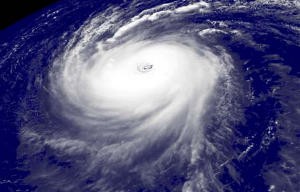
http://www.weatherwizkids.com/wp-content/uploads/2015/04/hurricane-300x192.jpg
This week we were studying weather. We had many things to study.

Humidity

Humidity is the amount of water vapor in the air. The two kinds of humidity are absolute humidity and relative humidity. The difference between absolute humidity and relative humidity is absolute humidity is the exact amount of water vapor in the air and relative humidity is how much water in the air compared with how much COULD be in the air. The most common way to measure humidity is relative humidity. `


Temperature

Temperature measures the hot or coldness of the air. There are 3 scales:  Kelvin, Celsius, and Fahrenheit.  The units are degrees.

Convert 55oF to Celsius
55oF converted to oC is  12oC
Convert 25 oC to Fahrenheit
25 oC converted to oF is  77oF
Calculate the Wind Chill Factor if the temperature is 35oF and the wind speed is 10 MPH.
If the temperature is 35oF and the wind speed is 10 MPH, the Wind Chill Factor is 27oF and -3 oC

Wind speed and direction

Complete the following chart using a wind speed of 22 MPH. ADD THE CORRECT UNITS

mph (miles per hour)
22 mph
knots
19.1 knots
m/s (meters per second)
9.8 m/s
ft/s (feet per second)
32.3 ft/s
km/h (kilometers per hour)
35.4 km/h

Air Pressure

Air pressure makes the wind fast and slow. That is its role. Air molecules invisibly floating in space give wind its mass. The three elements that affect air pressure are 1) The height above sea level, 2) Temperature 3) Amount of water vapor in the air.

The Coriollis Effect

The Coriollis effect is a phenomenon that causes water and air to spin as they travel across the Earth.

Precipitation

Five main forms of precipitation:  rain, sleet, snow, freezing rain and hail.  The following website outlines the atmospheric conditions that allow each type of precipitation to form.  Precipitation can be measured with a rain gauge.  
Sleet, snow and freezing rain will impact our area because our city isn’t used to having snow, sleet, and freezing rain.

Tornados

Below are two exciting tornado facts: 

A Tornado can occur at any time, but most often between 3pm and 9pm.

Tornadoes have been reported in every state in the US and also in every season.


Hurricanes


These are the things needed for a hurricane:


  1. Low wind shear
    2. Very moist humidity
    3. Sea temperature 26.5 degrees C
    4. 5-30 degrees North (latitude)

The last “key ingredient” that we need for a hurricane is a tropical disturbance, like an earthquake or a tidal wave.

Drought

The difference is between March 15, 2016 and March 14, 2017.

Move the slider left and right to see how the conditions have changed. Click on Legend to help you understand what the colors mean. How have the drought conditions changed in the last year?


Floods

My family would use this information to stay safe and know what to do in a time of flood. 

Tsunami

List 2 facts about a tsunami.

  1. Approximately every 15 years a destructive, ocean-wide tsunami occurs.”
  2. Tsunamis are usually caused my underwater earthquake or volcanic expolosion.

Conclusion
Write down 3 things that you think is important information.

I think that the most important thing to know is how to be safe in extreme weather conditions. The floodwatch told me what to do if San Jose ever flooded and how to be safe. That would be important because if you knew what to do, you would stay alive with maybe a few damages to your house and be alive. But if you didn’t know what to do, than you drown, get sucked into a twister, drown again from a tsunami, or be swept out to sea by a hurricane. Then your house would be worthless. So keep up to date with the weather and stay safe. :)
I think that the second most important thing is knowing all about extreme weather conditions so you know when they may end or what to do in a situation. Like knowing what happens during a hurricane can really help you know what you and your family has to do to be safe. You can know what to bring with you and you can know what to find, like higher ground. Also, you might have looked up what to do in a tornado and maybe you dug a basement. So hide there! :)
I think that the third most important thing is having knowledge and being prepared for any type of extreme weather. You can be safe during something that may cause harm to you and your family. That would be good, so that you can be prepared for anything. If you see any strange weather patterns, get inside, or be prepared for anything. It is good to know what weather does and what types to watch out for. :)

Monday, March 6, 2017

Project Blog 3/6/17


http://media.fluke.com/images/6005946a-Ti-science-heat-transfer-web-card-715x360.jpg
Mackenzie, Annie, Nic


What problem we worked on

The problem we worked on was that Mrs. Garcia goes to Starbucks and asks for the hottest coffee and by the time she gets to her car, the drink has lost about 10 degrees (celsius). Now by the time she gets to school, the temperature of the cup has dropped about half the original temperature. Our cup is designed to keep 250 ml of water hot for a half hour.


The items we used were plastic, styrofoam, fleece, tinfoil and duct tape. All of these items are good materials because we needed insulators on the outside to stop heat from passing through the outside and we chose and conductor for the inside because the conductor on the inside so that the tin foil can warm the drink from the inside.


  • Plastic makes a good insulator because it does not have free electrons within their structure. Free electrons are electrons that are unbound within the atomic or molecular matrix.
  • Styrofoam is a good insulator because the plastic foam contains billions of trapped gas  because bubbles. Gases hinder heat conduction because their molecules are very far apart, make it difficult for the molecules to collide.


  • Duct tape is a good insulator because it is made of rubber and the rubber is a good thermal insulator because it prevents electrons from coming through.


  • Aluminum foil is a good thermal conductor because it radiates away all of the heat so rapidly that it cools off much faster than anything else.
  • Fleece is a good thermal insulator because its fibers trap air inside it, making it difficult for heat to get in.
As you can see, all of these materials are extremely good materials. This is why we decided to use them.

How heat energy transferred worked in all our designs

We are using convection because the cup provides little insulation so a plastic lid helps reduce convection cooling of the coffee. Below is a diagram of our cup
   
Below are our pictures of our cup.                                                            cup.jpg cup.jpg


How our ideas changed:

Our original idea was to have a cup with styrofoam on the inside and duct tape holding it together. But that might drip, so we decided against it. Then we decided that we wanted something that would keep the coffee as warm as possible. Duct tape and styrofoam might not do the trick. So we decided to have nothing inside of the plastic cup and to put a styrofoam circle duct-taped to the outside. Then, we looked up which types of fabric insulates heat the best and we decided to create a wool sleeve. But after some research, we discovered that wool tends to “break” when wet. So we decided against wool. Our final sleeve is made of fleece. Fleece is made like wool and insulates heat well, but it is lighter and doesn’t sag or rip when wet. Fleece is better about being wet than wool. Originally, we wanted to hot-glue the sleeve to the cup, but then we decided when Ms. Garcia was washing it, she might want to wash the sleeve separately. So we made it reversible; one side solid purple, the other pineapple print. Then Nic said that maybe instead of just using insulators, maybe we could use a conductor! So Mackenzie added tin foil to the inside so that it would conduct more heat inside. But then we realized: How was Ms. Garcia to wash it? The tinfoil would get in the way, so we removed it.


Prototype Data Table

Prototype
Styrofoam cup
Plastic cup
Original Temp.


Temp. After 10 min


Temp. After 20 min


Temp. After 30 min


Final Test Data Table

Final cup
Original Temp.

Temp. After 10 min

Temp. After 20 min

Temp. After 30 min


Backward looking: In what ways have you gotten better at this kind of work?

I have gotten a lot better at working with a group over last and this year

Outward looking: Did you do your work the way other people did theirs? In what ways did you do it differently? In what ways was your work or process similar?


I looked at another group's work. They used a bottle instead of a cup, but we both put tin foil inside to keep the coffee hot. 


Inward looking: How do you feel about this piece of work? What parts of it do you particularly like? Dislike? Why? What did/do you enjoy about this piece or work?


I liked that we had to collaborate ideas with our team. 


Forward looking: What's one goal you would like to set for yourself for next time?


I want to focus more on the research first. 


Friday, March 3, 2017

Heat transfer project 3/3/17

http://www.konbini.com/us/wp-content/blogs.dir/9/files/2015/12/A-cup-displaying-the-Starbucks-Coffee-logo.jpg

Mackenzie, Annie, Nic


Our cup is designed to keep 250 ml of water hot for a half hour. The items we used were plastic, styrofoam, wool and duct tape. All of these items are good thermal insulators:


  • Plastic makes a good insulator because it does not have free electrons within their structure. Free electrons are electrons that are unbound within the atomic or molecular matrix.
  • Styrofoam is a good insulator because the plastic foam contains billions of trapped gas bubbles. Gases hinder heat conduction because their molecules are very far apart, make it difficult for the molecules to collide.


  • Wool is a good thermal insulator because the fibers trap in air and air is a good insulator because it doesn’t allow heat to transfer through it very easily.


  • Duct tape is a good insulator because it is made of rubber and the rubber is a good thermal insulator because it prevents electrons from coming through.
As you can see, all of these materials are extremely good materials. This is why we decided to use them.


S&EP: Sp2

We have to build a cup that will keep in heat so that Ms. Garcia's coffee will still be at a comfortable temperature by the time she gets from the Starbucks to the school.

Saturday, February 18, 2017

Types of heat transfer 2/18/17

https://cdn.me-mechanicalengineering.com/wp-content/uploads/2015/11/heat-transfer.jpg

This week we were learning about the types of heat transfer. There was conduction, convection, and radiation.

Conduction
Convection
Radiation

S&EP: SP2
We had to make a foldable to show our understanding. We needed to draw two images per type and write a description about it. Then Ms. Garcia made popcorn using the three types of heat transfer and we had to decide which was our favorite. I like the radiation one, because it was fluffy and flavorful.

Thursday, February 9, 2017

Genetics Project Blog 2/9/17

Image:
                                                                    Genetics poster

           Summary: For this unit we were learning about genetics. We were learning this by making a superhero. We needed to choose an animal we thought had 'superpowers'. I chose the frogfish, which is a fish that's head looks like a frog but its body is that of a fish. The frogfish can camouflage and it had a lure that pulls in food for it. My superhero's name is Rocket Jaw. We then needed to mate the super hero with a real super hero. I chose Super man. Then we created a child by learning about heredity and inheritance. I took six traits from Rocket Jaw and three traits from Superman to pass on. In the Epigenetics portion, decided via coin flip if the child would be healthy or sick after its lifetime choices. Mine was all healthy, but there were some adults that had sicknesses. After that we drew a picture of the child all grown up looking different from their lifetime choices. Then we created a villain. The villain had a normal mode and a nefarious mode. Then we chose four body systems to change in the nefarious mode. I chose skin, skeletal, eyes, and the lungs. The villain is in the picture up above. I really like this project.


Backward-Looking: Does this work tell a story?


I think my work does tell a story. It tells the story of the creation of a new superhero. I think I did well on this piece of work. 


Inward-Looking: How do you feel about this piece of work? What parts of it do you particularly like? Dislike? Why? What did/do you enjoy about this piece or work?


I feel god about this work. I really liked the drawing elements and there wasn't anything that I disliked. I really enjoyed that it had to do with an animal and that we could create our own superhero. 

Outward-Looking: What grade would you give it? Why?


I personally would give this work an A because it looked like I worked hard a nd took my time and didn't rush through it. 

Forward-Looking: As you look at this piece, what's one thing that you would like to try to improve upon?


I would like to improve on the detailed science part in the villain body systems. I could've written a more detailed description on how they changed when the villain switched mode. 

Friday, January 27, 2017

Villain Story 1/27/17

http://www.thesuperheroquiz.com/pics/villain-logo-tall.png

This week we were developing our villain. My villain's normal mode is a popular teenage girl in high school.  The nefarious mode is a swirl of alive vapor under a robe w/ hood. We had to choose four body systems to change out of these:
Circulatory
Respiratory
Excretory
Nervous
Eyes
Ears
Skin
Skeletal
Muscular
I chose Eyes, Respiratory, Skin, and Skeletal. My normal eyes are gray and oval shaped. The nefarious eyes are almond shaped, points out, and electric blue. My normal skin is the normal peachey color. The nefarious skin is black and only on the face. The normal skeleton is strong and sturdy, and the nefarious made doesn't have a skeleton. The normal mode lungs are healthy. The nefarious lungs are smaller then average and mostly clogged up.

We were drawing out our villains and their altered body systems. Then we wrote a one-two paragraph story on how our villain and superhero became enemies.                

Sunday, January 15, 2017

Suprehero Origin Story 1/15/17

P5fjyMa8BzZl0umooRPv5TPCVu2L9Wo5gF6lXfAPltAjqWeVjk3xZwc_lu_smyyPGfHqwg=s800

This week we were working on our Superhero Origin Story and how our super hero came to be. It had to be sciencey, like when Peter Parker got a mutation from that radioactive spider. We could choose either a mutation or a GMO (Genetically Modified Organism). I chose GMO. We needed to include the science or if it was in real life how it would happen. Here is my story. I chose to do a GMO. My superhero is based on the frogfish. But in my story, I made it so she thought she would breathe under the water like a clownfish. But the scientist screwed up and brought in some frogfish genes that were being studied. So she got the powers of a frogfish instead of clownfish powers. Frogfish are really special because they can do a lot of things. They can camouflage, they can sort of expand their stomach, and they have a retractable lure of like a worm or whatever. They lure food in by hiding and wiggling slightly to make the lure appear alive. Strangely, despite all of those awesome cool things they can do, frogfish can hardly swim. If you look here you will see that they sort of have little legs and feet shaped from their fins. They "walk" on the fins. I hope you enjoy the story!

Sunday, January 8, 2017

Genetics 2017

genetics-at-work2.jpg
                                  http://s.hswstatic.com/gif/genetics-at-work2.jpg
This week we were discussing our superhero child and whether it was healthy or sick. Mine was healthy in all of them except on one where they were at risk. We also had the same kahoot twice. I did pretty well on both times. The questions were like, ‘what is an allele?’ And the answers were like:
            
Then a chart would come up with the results like this.
meta-chart-7.png

I had  lots of fun while I was on kahoot.

Friday, December 9, 2016

Charity Fair Project blog 12/9/16


Trifold.jpg
This week we had the charity fair. My partner was Elizabeth Felchlin. We worked well together. Our charity was SHCS. Sacred Heart Community Service helps by gathering special things that the homeless need to survive. They gather food and clothes and other things. Sacred Heart has a volunteer service where you can spend some of your Saturday to come in and just help put together meals, or fold outfits or clean up all around so others can work. I have actually been to the volunteer service a couple of times, so this is why I thought this would be such a great charity to choose.

Backward looking: How much did you know about the subject before we started?
Last year I was at the charity fair and I knew a little bit about what to do this year because this charity fair was different from last year’s charity fair.


Inward looking: What did/do you find frustrating about it?
I found the ignite presentation about the charity frustrating. I started with some pictures that I didn’t like and then after my first practice round, I changed them. But they kept changing back to the ones that I didn’t like. So that’s what I found very frustrating.


Outward looking: If you were the teacher, what comments would you make about this piece?
If I were the teacher I would say ‘This may not have been your best work. What can you do better? What did you think you did well?’ Because it wasn’t my best work. I could’ve spent more time on my Ignite presentation so it could’ve been better.


Forward looking: One thing I would like to improve upon is …
My Ignite. As I said, that was the hardest part.


Thursday, December 1, 2016

Genetics 12/1/16

This week we were studying about genetics. We had different vocabulary that we needed to learn the meanings of. Some of them are:
  • Genotype
  • Phenotype
  • Allele
  • Homozygous
  • Heterozygous
  • Dominant
  • Recessive
Genotype
The sum total of genes passed from parent to offspring.


Phenotype
The traits in a person you can see.
Allele
Several types of the same gene.
Homozygous
Having the same pairs of genes for any pair of characteristics.  ðŸ’œ=💜
Heterozygous
Having two different genes in a pair for a characteristic.  ðŸ’›_💜
Dominant
The one in a pair of different alleles that blocks the effect of the recessive trait when both are present in the same cell or organism.
Recessive
Recessive is the one in a pair of different alleles whose effect is blocked by dominant if both are in the same cell or organism.

S&EP: SP7
Did you participate in a class discussion providing evidence for your answers, and/or used the ACE strategy in your work?


Yes, I did. In class, we had a discussion about these words and their meanings. We used some other kids answers to make a sentence frame for the questions Ms. Garcia asked in class.

Is There Life in Space? 5/23/19

Link  by NASA Solar System Exploration       We all know the typical sci-fi movie where an alien monster drops out of some unknown pl...