Saturday, February 17, 2018
Project Blog
This week we finished our biodiversity project. I have chosen the invasive species. We had to choose an invasive organism who is not native to where they live and explain why they are such a problem. We created an infographic about them. My invasive species is the cane toad. I learned that these toads are very large, about the size of a teacup and weigh about 2.5 lbs. They will eat anything that fits in their mouths, and pose a serious threat of endangerment or extinction to larger predators.
In class we needed to present our projects, and I learned a lot from them. One group did the beluga whale, which was being threatened by trash and oil spills in the ocean. They decided that they best way to save the belugas was to throw all of your trash away in the trash can, and to make sure that none of your pipes are leaky so that no spilled oil ends up in the ocean. One group did the markhor, which is a very interesting looking animal with curly horns. It faces extinction because people hunt it for trophies and for its horns. They decided that making it illegal to own a markhor horn or to hunt markhor would be a good way to save them. Another group taught us about the bumblebee bat, which got its name because it was so tiny. People are chopping down the forests where they live and human pollution is making them endangered. Listening to these presentations really help you to understand what other kids are learning and gives people a chance to present their findings.
Backward-Looking
What resources did you use while working on this piece? Which ones were especially helpful? Which ones would you use again?
I used a website called easel.ly to make my infographic, and I would definitely use that again. I also found a word art website that was fun and useful to make a frog shaped piece of art. I would so totally use those again.
Inward-Looking
How do you feel about this piece of work? What parts of it do you particularly like? Dislike? Why? What did/do you enjoy about this piece or work?
I am very proud about the infographic that my partnership made. I really liked the researching stage where we got to learn all about our organism. I also like the beginning part where we started to make the infographic. I didn’t like that my partner didn’t help me a lot. He just gave me his information and played typing games while I made the entire infographic. I did like how neat our product turned out, even though my partner didn’t help. I really enjoyed this project.
Outward-Looking
Did you do your work the way other people did theirs? In what ways did you do it differently? In what ways was your work or process similar?
I was one of the very few kids in the class that chose invasive species. There were five other people who had chosen it. One group made a diorama, so my infographic was pretty different from theirs. The other group made an infographic as well, but theirs was different from ours. The rest of the class made websites and timelines instead, so I was pretty different from everyone else.
Forward-Looking
What would you change if you had a chance to do this piece over again?
I would get my partner to help me. He spent the whole time talking to other groups and playing games online instead of helping me. We could’ve made a better infographic if he had helped, so next time I would get him to participate instead of playing useless games.

Sunday, February 11, 2018
Biodiversity

This week we were introduced to our biodiversity project. We either chose the endangered species part, or the invasive part. I chose the invasive species part. Invasive species is just what it sounds like-a species that is not native to the land they are living in. My group chose the cane toad as our invasive species.
The cane toad’s scientific name is Rhinella marina. The Cane Toad has to stay moist. It was native to South and Central America, but they were transported to the Caribbean and other islands. They live in areas like woodlands, low woodlands, low shrubbery, low open forest and open forests. They will also live in wet, damp areas. The cane toad is a large amphibian, about the size of a medium teacup. It’s average weight is about 2.5 pounds. It is incredibly toxic, and has collapsed many ecosystems because of its toxins.
The cane toads will eat anything small enough to fit in it’s mouth. Mostly small rodents, small birds, bats, and reptiles. There are not many organisms that can eat it without dying, but some eels can. Meat ants are also not affected by their toxins, and some birds can flip it over and attack from the underside. But there are not a lot of natural predators to the cane toads.
Cane toads were first native to South and Central America, but in 1935, the Australians had a problem with cane beetles, which were destroying the harvest a manufacturing of cane sugar. The cane toads were introduced to the Caribbean and other islands. They were also introduced to Australia to fix the cane beetle problem. But that didn’t work out very well, because though they didn’t eat a single beetle, they created a new problem. Cane toads collapse ecosystems. BIG time. They actually kill the bigger predators, like crocodiles and some large fish. They have driven some predators to extinction because of their poison, and they actually don’t harm the smaller organisms very much. Some of the bigger organisms are becoming endangered or extinct, so the smaller prey is taking this as a chance to overpopulate the ecosystem. So there is some species extinct, and some WAY overpopulated.
Cane toads are hard to kill off. They have been depleting slightly, because there are some of the toads infected with a lungworm parasite. Lungworm parasites can make the adult toads move slower, so that they are easier to catch. And about 30% of the baby toads are killed by this parasite. There is another way that the toads have been depleting. The tadpole babies are able to shoot an ‘alarm pheromone’ into the water to tell the other tadpoles to be aware of any danger. But this is not such a hot idea, since about half of the tadpoles die of fright before they reach adulthood, and the survivors are half the size they should be. The toads are already technically doing something about themselves, and the Australian government is already thinking about what to do about the toads.
S&EP: SP8: Communicating Information
For the project, we have to build some sort of poster or online way of communicating the information that we gathered about our species. My group chose to do an online infographic, a poster with timelines, images, and text to communicate information. I learned how to use an infographic maker called easel.ly to create our infographic. It contains all of the information about cane toads. This helped to teach me how to create an infographic, and how to communicate the known information in a fun and easy way.
XCC: Cause and Effect
The cane toads are a great example of a cause and effect relationship. The cane beetles were the reason they were brought to Australia. That is the cause. And the collapsing of the ecosystems, the species being driven to extinction, and others overpopulating. That’s the effect. I think that the people that brought the toads to Australia should’ve checked to make sure that they would actually catch and eat the beetles. Then they could be all like, ‘Oh, they won’t solve the problem. Guess we should do something else about the cane beetles.’ That is what they should’ve done.
Friday, February 2, 2018
Energy

https://upload.wikimedia.org/wikipedia/commons/9/96/Trophiclevels.jpg
This week we were studying energy in ecosystems and how the energy is passed around in a certain ecosystem. We were also discussing relationships between organisms in an ecosystem. Let’s begin with the relationships.
There are three main kinds of relationships: predation, competition, and symbiotic. There are three kinds of symbiotic relationships, mutualism, commensalism, and parasitism.
Predation
Predation is a predator-prey relationship. It always is a win-lose kind of thing, so one organism get a meal, and the other is the meal. Like if a rabbit were eating grass, the grass is the prey and the rabbit would be the predator in that certain relationship. If you had pizza for lunch, you were the predator and the pizza was the prey. That’s how it works.
Next We have Competition
Competition relationships are just like they sound: two organisms are competing for something, food, water, mates, shelter, it seems like they can find anything to fight about. Deer fight, so do gorillas, and even some birds compete for mates. It’s kind of like you battling your sibling for the last cupcake.
Next would be symbiosis, mutualism, parasitism, and commensalism
A mutual relationship is a win-win situation. Both organisms benefit. Like the Egyptian Plover is a kind of bird that needs food. It eats leeches. (Gross). The Nile crocodile, however, has leeches in its mouth, and needs to get them out. So the Egyptian Plover has a meal of “yummy” leeches, and the Nile crocodile gets rid of the pests. Their relationship is mutual. Like when you win the rock-paper-scissors game and you decide to give half of the cupcake to your sister. You both win.
Commensalism is when one organism benefits from the experience, and the other couldn’t care less. They really don’t care. Like the acacia tree and the orchid, the orchid benefits from the protection of the tree, whereas the tree doesn’t really get anything out of it. If you moved the orchid away, it would suffer, but the tree couldn’t care less. Like when your sister turns off your bedroom light when you’re trying to read. You care, since you can’t read, but your dog, who can see better than you in the dark, couldn’t care less.
Parasitism is where one benefits, and the other is harmed. Like a dog and a tick, the tick gets the dog’s blood as a meal, but the dog is uncomfortable and in pain for a while. Like when your sister wants you to piggyback her, she gets the benefit of a ride, but your hips are falling off.
Energy in environments
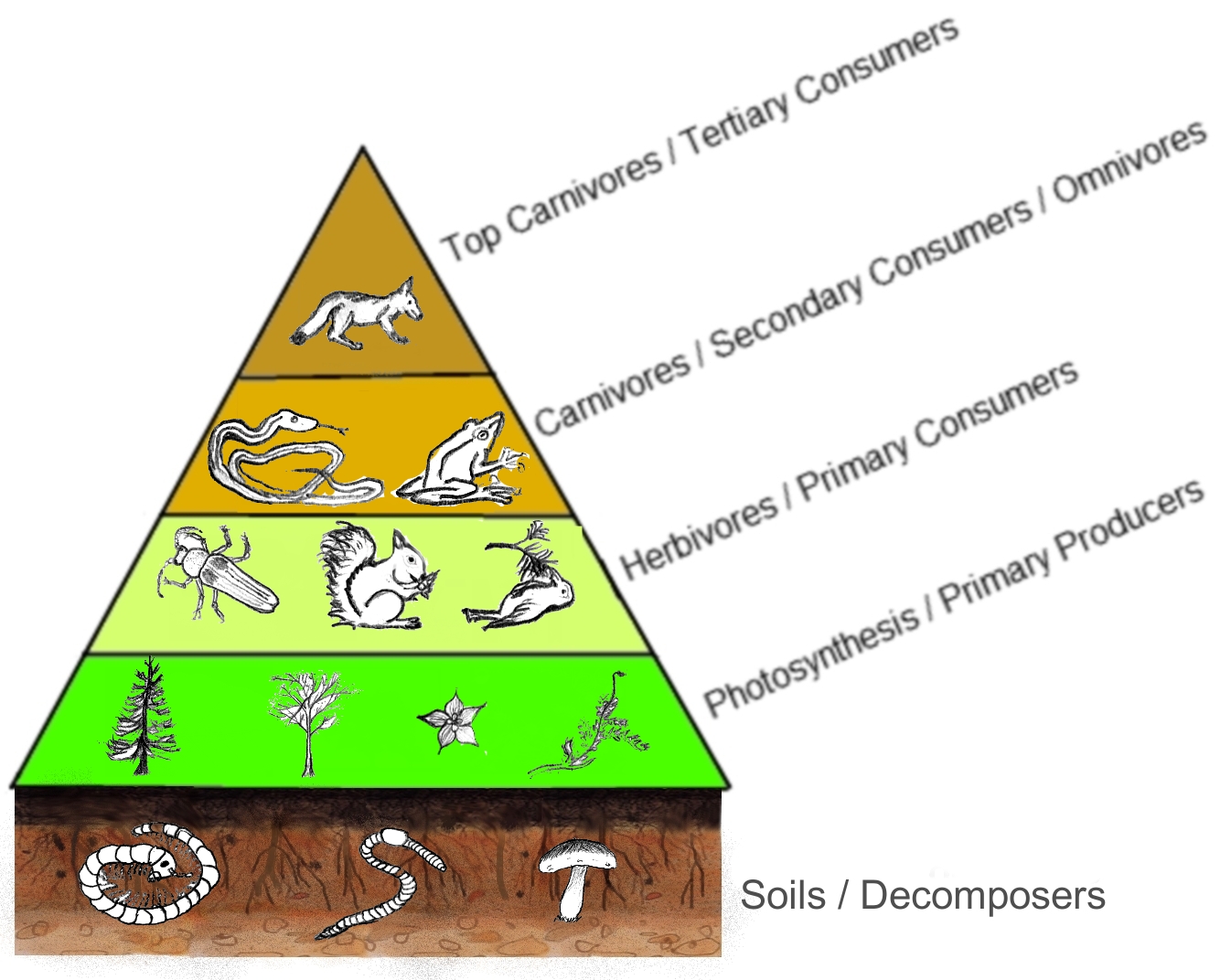
We know that plants are the producers in the ecosystems and they get their energy from the sun. Producers are called autotrophs. Next we have the primary consumers, the secondary consumers, and the tertiary consumers, all of which are considered heterotrophs. The energy pyramid shows us the trophic levels of the food chains.
The decomposers are set separately from the others because they get their energy from all of the levels. Plants get energy from the sun, herbivores get it from the plants, omnivores get it from herbivores, and carnivores get it from omnivores. Decomposers get it from everyone. Everything in an environment happens for a reason. If you removed the sun, nothing would grow, feeding no one. If the plants were removed, herbivores would die. So would omnivores, and carnivores… If you removed anything from the ecosystem, the rest would collapse.
S&EP: SP2 Using models
This week we used model to explain energy usage. We had four cups, two with one hole, one with two holes, and one with three holes. We were in a line, and a one holed cup scooped up a cupful of water to the brim. They passed it into their right hand and poured it into the next cup This went on until the last person poured the water into the graduated cylinder to measure how much water was left. Then we found out the energy efficiency.
XCC: Patterns
When we used the cup and water method to figure out our energy efficiency, we used a pattern: scoop, transfer, pour, transfer, pour, etc. The pattern was working excellently.
Sunday, January 28, 2018
Biogeochemical Cycles: Project Blog 1/27/18

We have finished our biogeochemical cycles project. I learned all about the nitrogen cycle, but also about the other cycles of the kids in my group. We had the water cycle, the carbon cycle, the sulfur cycle, and the phosphorus cycle.
Ms. Garcia quizzed us on the different cycles to see what we learned, and she gave us a question to think about.
The Water Cycle
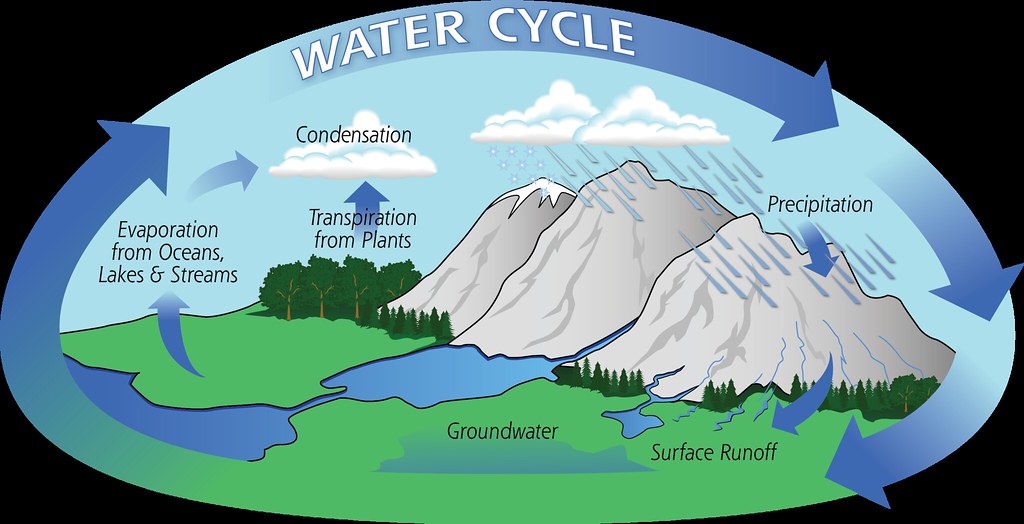
The water cycle is probably the most well-known cycle. When we started this project, the only cycle I knew existed was the water cycle. As most people know, the water cycle begins with evaporation. The sun or some other method of heat makes the water change its state of matter. The water, which at first was a liquid, is now a water vapor, which evaporates up into the atmosphere. Then, condensation happens, and the vapor condenses into clouds. Then, its precipitation, where the water takes the shape of rain, snow, or hail and falls to the earth. We also have runoff, where the water runs off of mountains and things like that and gathers in lakes. Lastly, we have transpiration where the plants will take in water.
The Carbon Cycle
As said before, I have never ever heard of the carbon cycle before this project, but I have a pretty decent understanding of it. My cycle was nitrogen, so I know the most about that, but I understand all of the cycles. The carbon cycle begins with photosynthesis. Plants take in the carbon through photosynthesis. The humans and/or animals eat the plants, and they get the carbon that they need through the plants. The humans/animals exhale, and the carbon is returned to the atmosphere as carbon dioxide. Also, if an animals/human dies, he carbon will come out of their decaying body and will return the the atmosphere. Another way the carbon is released is through fossil fuels and factory emissions.
The Nitrogen Cycle
As you probably know from a previous blog post, plants take in nitrogen through ammonia. They use the ammonia to grow bigger, and then humans/animals eat the plants and get the nitrogen that they need through assimilation. Then the bacteria changes the ammonia into nitrates, which break down into nitrites during denitrification. When the nitrites break down, they turn into ammonia and nitrogen gas.
The Phosphorus Cycle
If I were looking at a periodic table, and I had to guess which element had a cycle, I would not choose phosphorus. It was very surprising to me that it was actually a thing. But it is, and the cycle is pretty straightforward. Plants absorb phosphorus from the soil, and then animals eat the plans, and then the animals die, and the soil absorbs the phosphorus from their bodies. The phosphorus is leached into the water supply. Another beginning to it is where wind and rain erode down the phosphate-rich rocks. Rivers then carry the gravel and silt with the phosphorus in it to bodies of water. Runoff from phosphates in farming also goes into the rivers. In the river, the silt becomes sediment, then a new rock. And then, geological uplift pushes the new rock to the surface.

The Sulfur Cycle
The sulfur cycle is pretty easy. It begins with the rain weathering down rocks, releasing any stored sulfur. Sulfur is found in rocks. When the sulfur meets the air, it transforms into sulfate. The sulfate goes into plants, and then animals eat the plants. Animals then die, and the sulfur goes out of them and into the soil and rocks.
Backward Looking: How much did you know about the subject before we started?
I only knew about the water cycle before we began this project. I didn’t know that any other cycle existed, and I really understood how the water cycle worked. I hadn’t really learned about any of the other cycles, but I learned a lot about them from this project. I had a lot of fun doing this and learning from it.
Inward Looking: What did/do you find frustrating about it?
What I found frustration was that I had a lot of boxes for the comic strip, and I had to research my cycle, draw out 25 squares, color 25 squares, cut out 25 squares, and glue 25 squares onto paper backing in a week and a half. In the end I was rushing slightly, so some of the squares are not my best work, but I really found my timing a bit frustrating. I could’ve done it, but I set myself too much to do and that was a minor setback for me.
Outward Looking: What the one thing you particularly want people to notice when they look at your work?
I want people to notice how hard I worked on my comic when they look at it. I have a lot of information and a lot of squares that I think are carefully drawn and colored and all I want people to notice is the amount of effort put into my project.
Forward Looking: What would you change if you had a chance to do this piece over again?
I think that i could’ve had a better, more informative ending to my comic, so I would have fixed that. I would really have put more thought into how the comic ended instead of just scribbling out the first thing that came to mind. It would have made me more satisfied and would have added more information to the piece.
Ms. Garcia asked us what we thought the most important cycle is and why.
I think that all of the cycles are equally important because they are all mandatory for life. Carbon, water, phosphorus, sulfur and nitrogen go into plants to help them grow, and we need plants to live and survive. We also need water to drink to live.
Sunday, January 21, 2018
Biogeochemical Cycles 1/21/18

This week in class, we began our project on biogeochemical cycles. (Bio-geo-chemical). These cycles take CNWPS all around the earth, carbon, nitrogen, water, phosphorus, and sulfur. For the project, we have chosen one cycle. We must create a comic strip that informs the reader about our cycle. We have to have some key words in the strip. My chosen cycle is the nitrogen cycle, so I’ll include information on that. There is a video in there if you would like to know more about the other cycles.
What are the cycles like?
A cycle is meant to take something around in a circular sort of motion, like the picture above. You can start with one thing, say precipitation, and then the water moves through runoff, groundwater, evaporation, condensation/transpiration, and then precipitation again. No matter where you start in a cycle, you’ll always end up back where you started.
The Nitrogen cycle
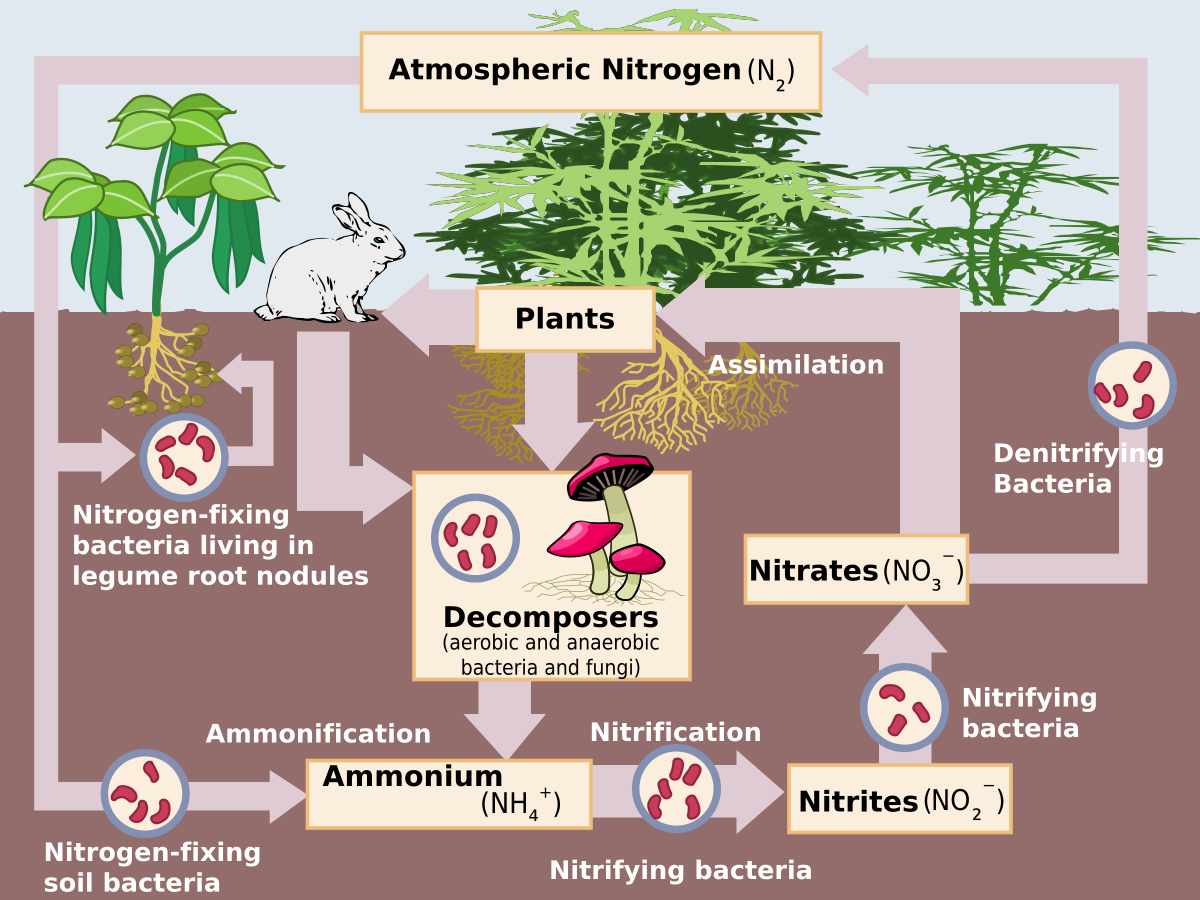
Before the cycle begins, nitrogen is just a gas, N2, that makes up 78% of our atmosphere. Then the cycle goes around to these little stops: nitrogen fixation, ammonia, fertilizers, assimilation, ammonification, nitrification, nitrates, eutrophication, denitrification, and nitrites. To make it less complicated, I’ll describe them one by one, but if that’s still a bit confusing, you can watch the full video.
Nitrogen fixation/Ammonification
Nitrogen fixation is when bacteria in the soil and roots of plants are taking in the nitrogen from the atmosphere. They then convert the nitrogen into usable ammonia. Ammonification is the same thing, where it helpfully converts the nitrogen into ammonia.
Plants need mineral nutrients, such as nitrogen in order to grow, but plain old nitrogen from the atmosphere cannot be used. In order for the plants to get the nitrogen they need, the bacteria in the soil and roots converts the unusable nitrogen into ammonia, a form of nitrogen that plants and other organisms can use.
Ammonia & Fertilizers
As said before, ammonia is the usable source of nitrogen for plants and other organisms. Ammonia can also be used as a fertilizer for plants since it helps them grow so well. Nitrogen is needed for organisms to survive, and ammonia is the way they can get it. Most fertilizers are made of animal waste, which is also surprisingly good for plants, but ammonia is another good way to supply a plant with nitrogen.
Assimilation
Assimilation is quite important for us humans. We need nitrogen too, and one way we can get it is by eating plants. Say we have a carrot plant. The bacteria in the carrot’s roots transform the nitrogen into ammonia fertilizers, letting the carrot grow. Then, a human would come and eat the carrot, receiving the amount of nitrogen they need from the carrot.
Nitrification
Nitrification is the process when ammonia found in the soil is converted to nitrates, which are inorganic form of nitrogen.
Nitrates
Nitrates can be leached, meaning that they leave the soil in drainage water. Then the nitrates move into a water supply, causing an algal bloom.
Eutrophication
Eutrophication is when the nitrates move into the water supply, causing a lot of algae to grow. Algal blooms are bad for the environment because when the algae dies, bacteria have to break it down, using lots of oxygen that humans need.
Denitrification & Nitrites
Denitrification is when the nitrates are reduced into nitrites. The nitrites are then reduced into more ammonia and nitrogen gas, thus starting the whole cycle over again.
S&EP: SP8: Communicating Information
Part of our big project this week is learning about our cycle, but also communicating our knowledge into a comic strip. It’s very important to have your facts straight before you begin the strip, because then you could have it all wrong, or mixed up the words and the people reading your strip won’t understand or will have the wrong information in their minds.
XCC: Cause and Effect
If plants could just use plain nitrogen instead of needing ammonia, then the whole cycle wouldn’t be needed. We need the nitrogen cycle because the plants can’t use the plain nitrogen. They need ammonia instead of nitrogen, so the whole cycle is there so that the plants can have ammonia.
Sunday, January 14, 2018
Weekly Science Blog

This week we began studying photosynthesis. Photosynthesis is an endothermic process by which
plants and other organisms (since some animals perform photosynthesis) make glucose sugar so that
they can survive and grow. They take energy from the sun and store it.
Photosynthesis basics
To perform photosynthesis, you need to have sunlight, water, and carbon dioxide. For products, you
get glucose sugar and oxygen.
As said before, photosynthesis is an endothermic reaction. This is because the plants trap energy from the sun and store it. The equation above is photosynthesis, the balanced version. You need 6 carbon
dioxide molecules and 6 water molecules to yield 6 oxygen molecules and 1 glucose molecule.
Cellular respiration is the opposite of photosynthesis. It is and exothermic reaction, since endo and
exo are opposites. As you can guess…
... cellular respiration is the same equation as photosynthesis, just backwards.
Photosynthesis is the introduction to our new unit, how organisms depend on each other for survival.
Where do trees get their mass?
Some people wonder where trees get their mass from. Many take wild guesses. Can you see if you
know?
- Soil
- Stardust
- Magic
- God
- Rain
- Sunlight
- Oxygen
- Carbon dioxide
The truth is, trees are mostly made of carbon dioxide, meaning that when you climb a tree to sit in it, you’re sitting on air.
Biotic and Abiotic factors
A biotic factor is a part of an ecosystem that is living. Plants and animals are biotic factors. Abiotic
factors are parts of the ecosystems that are non-living or dead. Ecosystems have both living and
non-living factors.
Biotic factors
|
Abiotic factors
|
Trees
|
Rotting log
|
Insects
|
Rocks
|
Fish/animals
|
Dirt
|
Plankton
|
Sunlight/heat
|
Grass
|
Water
|
Fungi
|
Air/oxygen
|
Bacteria
|
Plastic
|
Plants
|
Animal waste
|
Biotic and abiotic factors affect each other. Water is abiotic, but if there is no water, than the biotic
factors of the ecosystem will struggle to survive. And if biotic factors didn’t die, they wouldn’t be
decomposed and their bodies wouldn’t help the soil. So, whether the ecosystem is dead or alive, we
need everything that is in it.
Food chain
The food chain is also has things that depend on each other.
Another way to write it shows how much energy each level has and proves which is the most energy efficient diet, plants, meat, or omnivore.
Primary consumers are the most energy efficient diet.
Photosynthesis: Planta gain energy through photosynthesis.
Cellular respiration: Plants lose energy through cellular respiration.
Abiotic: Non- living parts of an ecosystem.
Biotic: Living parts of an ecosystem.
S&EP:
SP1 Asking questions
This week I asked lots of questions to myself which I got answered as the lessons went on. Like what is a tree made up of? A tree is mostly air. Asking questions is always smart so that you can get answers that help you understand science more.
XCC
Cause and effect.
Cause and effect is shown here in these lessons. If one factor of an ecosystem vanishes or dies, the
rest of the entire ecosystem will be thrown off of balance. If leopards in a rainforest went extinct, what
they eat will be overpopulated, and what they eat will be underpopulated. We need every part of an
ecosystem for it to work.
Subscribe to:
Posts (Atom)
Is There Life in Space? 5/23/19
Link by NASA Solar System Exploration We all know the typical sci-fi movie where an alien monster drops out of some unknown pl...
-
 This week we started the superhero life science unit. We needed to choose an animal with “superpowers”. I chose the frogfish. The frogfis...
 -
https://upload.wikimedia.org/wikipedia/commons/2/23/216_pH_Scale-01.jpg Last week, we learned: What a precipitate is What a cat...