Sunday, April 17, 2016

Series and parallel circuits


This week Learned about series and parallel circuits. A parallel circuit is when you have either two batteries, two lights, or two switches. Say I had two lights. I would build the circuit so that the lights would never touch. So I would build it where the lights were across from each other. A series circuit is when the electricity has one path to follow. Unlike a parallel circuit which goes in two or more paths, a series circuit has one path to follow.    


images

S&EP:SP2: Developing and using models
This week we were building circuits, which was a kind of model. We had wires, a battery, and some lights. We built different kinds of models. 


Friday, April 8, 2016

Electricity

The-Future-Of-Electricity1.jpg

Summary: This week we were experimenting with electricity. We had a bunch of centers. At center 1, we were reading some stories and were writing some advice. They were all stories based on electric related accidents. Some advice was not to fly kites around power lines, don't climb electric towers, never put electronics near water, that sort of thing. At center 2, we built a circuit. Everyone in the class had a wire, two people had a battery, and one boy had a light. We all connected our wires, batteries, and lights together to create a giant circuit. We had to be careful, though, because about seven people got shocked. I learned to be careful around electricity. Center 3 was were we were testing conductors and insulators. The conductors were a silver bracelet, a penny, and pencil lead. The insulators were a marker, cloth, and a rubber balloon. I learned that the conductors were mostly metal. There were other centers that I liked. Like station 9. We ice-fished. We would stick the "hook" into the ice and find the "fish" (paperclips). If the hook touched a fish, the light would glow. 


S&EP:SP4" Analyzing data
We had a journal that we would use to keep track of our data. We would have to answer questions and write down the answers in the journal. Most of the questions were: What do you think you are supposed to do with it? What are the parts you can see? What are the parts you can't see? What do you think you are supposed to do with it? I learned all about how to stay safe nearby electric currents, power lines, outlets, and more. 

Thursday, March 17, 2016

Mineral Project Blog

http://geogallery.si.edu/img/objects/400x400/DMS110300146.jpg

This week I learned a lot about my mineral amazonite. It's colors are blue, green, purple, gray, and multicolored. The luster is vitreous. It's density is 2,56-2,58 g·cm-3.
The chemical composition is KALSiO8 Potassium aluminum silicate. The hardness is 6 - 6.5. No condiuctivity was detected. Streak: white. The cleavage/fracture is conchoidal. The mineral structure is Triclinic.


How much did you know about the subject before we started?
Well, I didn't know very much, but I knew some things. In the summer, my mom would give me a topic to research and I would present that research in a presentation to her at the end of the day. Sometimes the topic was minerals. 

What was especially satisfying to you about either the process or the finished product?
The most satisfying part of the process was that most of the information was easy to get. I worked hard on my project, and even found my mineral! I found it in Idaho. 

What the one thing you particularly want people to notice when they look at your work?
One thing I want people to notice when they look at my work is that I worked hard on it. i made sure that I wrote everything correctly and outlined it with a border. 

What would you change if you had a chance to do this piece over again?
I would change the way I bordered each of the information sections. 


Sunday, March 13, 2016

Mastermines

NatCopper.jpg
this week I learned a lot about the tests that scientists use to identify minerals. We were playing a game called Mastermines and I learned all about the tests. We went to different mines and found minerals. Then we brought the minerals back to the lab and identified them. We used luster test, cleavage test, structure test, color test, density, hardness, conductivity, and streak. For the streak, we rubbed the mineral on a porcelain plate and a powdery color came off of it. Diamond was white. On cleavage, we hit the mineral and determined clean break or no clean break. Feldspar had clean break. On density, we measured the weight and volume of the mineral. On the color test, we found out what color they were. Garnet was red-brown. On structure, we found out what the crystal structure of the mineral was. There were triclinic, monoclinic, cubic, hexagonal, and a rectangular one. On hardness, we scratched the mineral with different rocks to determine where it fell on the Moh's hard scale. Borax was a 2. On the luster, we shone a light on the mineral to see if it was vitreous, adamantine, dull, metallic, or pearly. Copper was metallic. For the conductivity, we had to find out how well each mineral could conduct electricity. Borax was an insulator. I also learned how to use the machines at each test.

S&EP: SP2
I used a worksheet to keep track of my data on the mastermines game. We had to keep track of a lot of data. I did some of my project at home.

Thursday, March 3, 2016

Element baby book

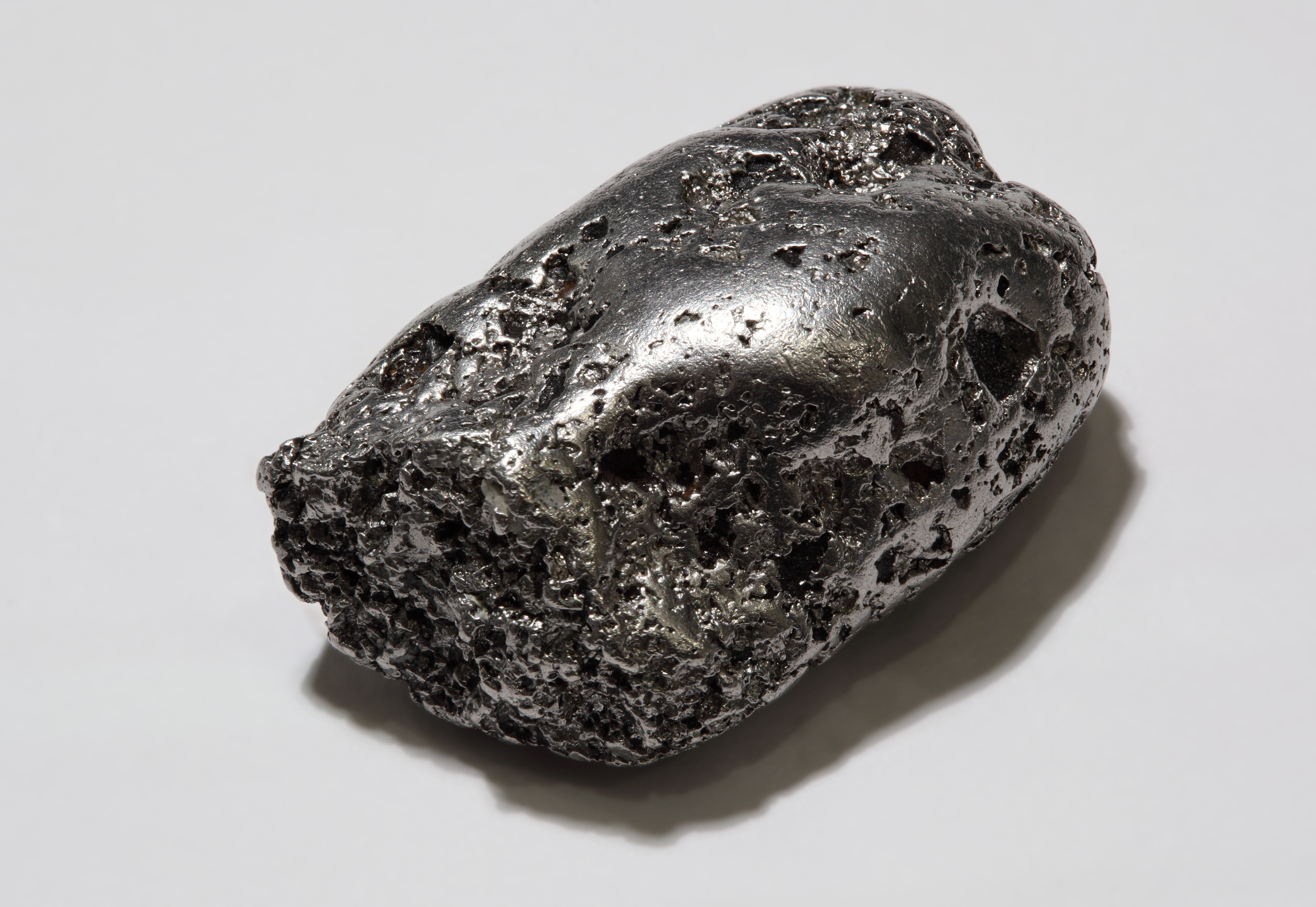
https://upload.wikimedia.org/wikipedia/commons/6/6a/Platinum-nugget.jpg

This week we finished up our element baby books. Mine ended up pretty good and I learned that platinum is very rare and its population is 0.003 ppm in the earth's crust. Platinum is also very hard to find and we need it for about one fifth of the things we use. I have a good presentation and worked hard on it. I also learned that Platinum has 78 protons, 117 neutrons, and 78 electrons. It's family name is called the Transition Metals and has four other members.

How much did you know about the subject before we started?
Well, not really anything. I always wanted to know about elements and the periodic table from what my parents said about it but I never really understood anything that they said. It was always about chemistry. But I always was curious about the fact and pictures that my parents showed and tried to teach me. My parents love chemistry! And now, so do I. I really loved the project and I want to do it again. It was so fun!

How do you feel about this piece of work? What parts of it do you particularly like? Dislike? Why? What did/do you enjoy about this piece or work?
I liked how much I learned about the elements and disliked how little time we had to complete it. I absolutley loved the facts that I found but I feel like I could do it a lot better if I had more time. But the project in general was really really fun. 

What grade would you give it? Why?
I would give it an A- because I feel that if I had focused more I could have put in a lot more facts, and good ones too. I just feel that I allowed myself to be distracted in other people's projects and wasn't focused a lot on mine. 

What would you change if you had a chance to do this piece over again?
I would change how focused I am. I could do a lot better if I was very focused.


Sunday, February 28, 2016

Periodic Elements.

http://sciencenotes.org/wp-content/uploads/2014/11/PeriodicTableMeltingPoint.png
This week we started a project that was our element baby book. It is a book based on our element's life. I am doing platinum and I learned a lot just by doing research. Platinum was discovered in 1735 by Julius Scalier. Platinum is a metal and it's atomic mass is 195.084 u. It's atomic number is 78. The number of protons is 78, the number of neutrons is 117, and the number of electrons is 78. Platinum's melting point is 3,215°F and it's boiling point is 6,917°F. The name of its family is Transition metals and the other elements in its family are Ruthenium, rhodium, palladium, osmium and iridium. Platinum is used in jewelry, containers and catalyst.


S&EP: SP4
This week I made a table to keep my data on the periodic table in order and safe. I wrote down all of my data and I know where I keep it so I can reverence the text whenever I need to.


Friday, February 12, 2016

Matter matters

http://www.learnnc.org/lp/media/lessons/Indianajennette2112003807/ThreeStatesofMatter.jpg
Summary: This week I learned that matter is anything that takes up space. Three states of matter are solids, liquids, and gases. Matter can change states. The most common way matter changes is temperature changes. If I had a beaker with an ice cube in it and heated it, it would melt and turn from a solid to a liquid. If I cooled the liquid, it would turn back to a solid. If I heated the liquid, it would turn into a gas. If I cooled the gas, it would turn back into a liquid. If I heated the gas, It would explode the lid of the beaker. So matter likes to change. The three main states of matter are solids, liquids, and gases. There are two more states. Plasma another one.


S&EP
This week we were looking at different websites to find out more about matter.
I found out that matter changes all of the time. We were doing two different games.
One was a matter sorter. It would give me a tile and then I had to sort the tile into either
solid, liquid, gas or plasma. A pencil is a solid, soda is a liquid, air is a gas, and lightning is a plasma.

Sunday, February 7, 2016

Mystery crystals

WiIZ7453042.jpg
This week we were continuing our mystery crystals experiments. We were still trying to discover what the mystery crystal was. One of our experiments was to dissolve the crystals in water, pour out the water, and saw the remains of the crystals. The uno nown was really kosher salt. Then we started matter. An example of a chemical change is when you mix baking soda and vinegar. An example of a physical change is when you peel a banana. When you mix baking soda and vinegar, the atoms rearrange themselves to make something new. When you peel a banana, the atoms do not rearrange themselves and do not make anything new. 


S&EP: SP3: Planning and carrying out investigations
We asked ourselves, well, if baking soda makes a chemical reaction, then baking powder must do the same thing! We did the experiment and it worked! But not in the same way. The powder fizzed, but not in the same way that the soda did.


Sunday, January 31, 2016

Crystal experiments 1/31/16

http://www.ephotosworld.com/images/image-of-sugar.jpg

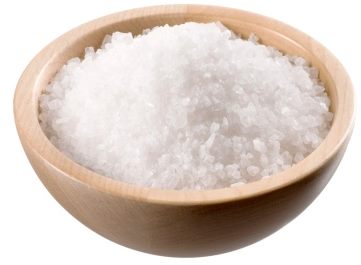
This week I started to discover crystals. The Experiments we were doing were all about trying to discover the unknown crystal. On the piece of paper we had salt, sugar, MSG, and Epsom salt. I was looking at all of the different crystals and trying to find differences and similarities. Salt and sugar both looked like little cubes. Then, I was given an unknown crystal and was trying to figure out what it was. It looked a lot like Epsom salt, But it only had clear crystals. Epsom had clear and white crystals. It couldn't be MSG because MSG was like tiny little shreds. Salt and sugar were much to small to be the unknown crystal. Then, instead of observing them, we crushed them to see if that was another way to find out. The Epsom and the unknown both were crushed into a fine powder, but were still different colors. Will we ever find the identity of the unknown?


S&EP: SP4:Analyzing and interpreting data
I used a worksheet to keep track of my data. We had several different worksheets to draw my data upon. I had a lot of data.

Friday, January 8, 2016

Weather

http://dreamatico.com/data_images/weather/weather-7.jpg
Summary: This week I learned about cold and warm fronts, why the warm air rises, and about high and low pressure systems. If there is a high pressure system and a warm front, you can expect a clear, sunny day. If there is a low pressure system and a cold front you can expect a cold cloudy ( possibly rainy) day.


SP4: Analyzing and interpreting data
This week we were doing an activity where we would gather data from a website. Like if the sheet said to turn on the drifting balloon setting and then watch the balloon move throughout the day, you would do it. If it said gather the wind direction and temperatures on the four corners of the screen, you would do it.


Is There Life in Space? 5/23/19

Link  by NASA Solar System Exploration       We all know the typical sci-fi movie where an alien monster drops out of some unknown pl...