Friday, October 5, 2018

WAC | We are not in a sixth mass extinction | 10/5/18


Despite what scientists are saying and thinking, we are not in a sixth mass extinction. Though signs may point that direction, we aren’t there yet. It is possible that in the very near future we will enter a mass extinction, but we haven’t reached that point. Five mass extinctions have been recorded in Earth’s history, each wiping out 70% of life on the planet or more. However, as stated by the 22nd paragraph in AEON’s article We are not edging up to a mass extinction by Stewart Brand, “There were soon many more species alive after each catastrophe than there were before it.” Even if we were in the midst of a sixth mass extinction, it would take decades, maybe even centuries to the see the results, and if anything was still alive, it would find a way to adapt to the new environment, or it would die. Eric Worrall states in his article Paleo Expert: Earth is Not in the Midst of a Sixth Mass Extinction that “...this is because by the time a mass extinction starts, the world would already be over.” It would take a long time to see if we were in a mass extinction, and by the time we had entered it, everything would already be gone. As has been noted, scientists are saying that a mass extinction might be coming in the very near future, but it won’t begin for a while. Still, scientists are not denying that humans are the reason this might happen. 

Even though some might argue that climate change is the reason more and more species are going extinct, there are quite a few that are actually adapting to the circumstances around them and finding new ways to survive. It might not be easy, but it is possible. Stewart Brand’s AEON article brings up a good point in saying, “Move, adapt or die. When organisms challenged by climate change respond by adapting, they evolve. When they move, they often encounter distant cousins and hybridise with them, sometimes evolving new species. When they die, they leave a niche open for other species to migrate or adapt into, and a warming climate tends to open the way for more species rather than fewer.” Take the Galapagos islands for example. They started out as nothing but a barren wasteland of volcanic rock and ash, and when organisms moved to them or were swept out to sea and were stranded, they either had no way to get back to where they were or they didn’t want to. Lizards that ate leaves were moved to an arid island free of vegetation and had to evolve to dive deep and reach the nearest plant: seaweed. Over hundreds of years, the lizards that used to be living in trees were diving into the ocean to reach seaweed to survive. Animals and other organisms are able to adapt to their circumstances and help each other, no matter what may happen. Climate change could be affecting animals and organisms, like marine life or organisms that inhabit rainforests. When we destroy habitats for our own gain, that can deplete entire species that were once proliferating. As mentioned earlier, most organisms can adapt, but there are some that are unable to and die off completely. Just because some species are going extinct doesn’t mean that we’re in the midst of a mass extinction, but it does mean that if we keep it up, we could be. 

Even though another mass extinction event seems to be coming, we still won’t be around to see it. If another does occur because of human activity, it will happen within the next few decades or even centuries. That doesn’t seem so close, but most mass extinctions in the past took hundred to thousands of years to physically begin destroying the world. 
“Nothing we have done to the climate or the world in general comes anywhere close to the unimaginable circumstances of previous mass extinctions.”, says Eric Worrall in his article Paleo Expert: Earth is Not in the Midst of a Sixth Mass Extinction. “Erwin does not rule out the possibility we might somehow trigger a mass extinction in the future. But killing off a few photogenic species simply doesn’t qualify.” Being the cause of several extinctions isn’t wonderful, but it also isn’t triggering the end of the world. Although some people may think that the extinction will wipe out all life and humanity within the next decade or so, a devastating event is several centuries away. AEON states that “Many now assume that we are in the midst of a human-caused ‘Sixth Mass Extinction’ to rival the one that killed off the dinosaurs 66 million years ago. But we’re not. The five historic mass extinctions eliminated 70 per cent or more of all species in a relatively short time. That is not going on now. ‘If all currently threatened species were to go extinct in a few centuries and that rate continued,’ began a recent Nature magazine introduction to a survey of wildlife losses, ‘the sixth mass extinction could come in a couple of centuries or a few millennia.’” Just because seem like they’re looming closer doesn’t mean they actually are, and our generation isn’t in any danger from any mass extinctions any time soon.

Some people might argue that we are in a sixth mass extinction. Some scientists believe the same things, but there is no solid proof that we are. Still, there are people who are arguing for this position, and there are many reasons why. In CNN’s article Sixth mass extinction: The era of 'biological annihilation' by John D. Sutter, it states that “‘We've got this stuff going on that we can't really see because we're not constantly counting numbers of individuals,’ he said. ‘But when you realize that we've wiped out 50% of the Earth's wildlife in the last 40 years, it doesn't take complicated math to figure out that, if we keep cutting by half every 40 years, pretty soon there's going to be nothing left.’” More people argue for this because studies show that species are depleting faster and faster. “In a 2015 study, biologist Paul Ehrlich and his team argued Earth is in an era of mass extinction rivaling the one that killed the dinosaurs. They estimated Earth is losing mammal species 20 to 100 times the rate of past such extinctions and that the rate is only expected to speed up.”, says Newsy’s article Scientists Can’t agree if we are really in a mass extinction by Sarah Schlieder. However, people have been trying to help the environment by recycling, using eco-friendly cars and solar panels to power things instead of using pollutants. This rate of extinction has probably lowered since the time this study took place, three years ago.This argument is not enough to change the fact that we aren’t in a mass extinction. Eric Worrall’s Paleo Expert: Earth is Not in the Midst of a Sixth Mass Extinction article just about sums it up, saying, “Picture previous mass extinctions; the sky darkened for months, maybe years by gigantic impacts or vast volcanic eruptions which lasted for thousands, even millions of years; Poisonous fumes spreading across the entire world, choking the life out of entire continents; A handful of animals and plants somehow scrounging warmth and food from an almost lifeless wasteland.Compare this nightmarish hellscape to the slight wobble we may have helped introduce to global temperatures, a wobble so small it cannot be reliably differentiated from previous natural wobbles which occurred in the last few centuries.” What we are doing may not be good, but it isn’t ending the world either. 

Even though many amazing species are going extinct faster and faster, that doesn’t necessarily mean that a mass extinction is in the near future. Mass extinctions wiped out over 70% of all life on Earth, and the eradication of a few species, beloved as they are, doesn’t really count. 
Newsy’s article Scientists Can’t agree if we are really in a mass extinction says, “Stewart Brand, president of the Long Now Foundation, says current rates don't signal a mass extinction because the past five wiped out at least 70 percent of all species in a relatively short time. He says current rates are too slow for us to be in the middle of one.” This means that, even though the extinction of several species is bad, it isn’t a massive destructive event that’s going to destroy the world.Eric Worrall’s Paleo Expert: Earth is Not in the Midst of a Sixth Mass Extinction article goes on by saying, “‘Many of those making facile comparisons between the current situation and past mass extinctions don’t have a clue about the difference in the nature of the data, much less how truly awful the mass extinctions recorded in the marine fossil record actually were,’ he wrote me in an email. ‘It is absolutely critical to recognize that I am NOT claiming that humans haven’t done great damage to marine and terrestrial [ecosystems], nor that many extinctions have not occurred and more will certainly occur in the near future. But I do think that as scientists we have a responsibility to be accurate about such comparisons.’” 
People may think that extinctions are coming to destroy the world, but they need to make sure that they’re getting accurate information. Some people only glance at a headline instead of reading the article below it, which may have a very different perspective than a single line of text. All in all, some people are assuming things that aren’t true or isn’t the proper information. 

The Earth is not in a sixth mass extinction, no matter what things seem like. They might be coming up soon, sometime within the next few centuries, but we’ll all be gone, so there’s nothing really to worry about. Even though several beloved species, like the African elephant and the Black Rhino, are going extinct, that doesn’t necessarily mean that everything is going to die. Like the Galapagos example, organisms are fully able to adapt to their new surroundings and even evolve into an entirely different organism if they need to to survive barren wasteland, underground, in the forest or in a desert. People that just scan for headlines don’t know the full picture. If you don’t read the articles below, you’ll never really know some ideas and information that could change your entire perspective. Even though headlines may read, ‘BLACK RHINO, NEARING EXTINCTION’, that doesn’t mean that we’re all in danger. Next time someone tells you something that may seem questionable, check to make sure that you can see the full picture and both sides of the argument. Once again, even though many people argue against it, we are not in a mass extinction.


Saturday, September 29, 2018

Geologic Time Project Blog 9/29


Most of the major events that occurred in Geologic Time happened later on down the timeline, closer towards modern times. Earlier on, animals, plants and other organisms were evolving. Geologic time is a record of the history of rocks and fossils in the Earth, so scientists are making predictions and hypotheses as to what could’ve occurred during that time.

Each of the eras had a remarkable event that was marked off in Geologic Time. For instance, in the Precambrian era, the Earth was formed and life was just beginning to evolve. Bacteria and fungi came before humans, and oxygen even appeared when the Earth developed an atmosphere. In the Paleozoic era, the end-Permian extinction cut off many invertebrate groups. In the Mesozoic era, scientists believe that an asteroid from space crashed to the Earth and wiped out all dinosaur species. In the Cenozoic era, the ice ages occurred, and at the end of them, the sudden climate change caused many large mammal species like woolly mammoths and sabre-tooth cats to go extinct.

All of these events have been marked in fossils and rocks that scientists have studied. They came up with the Geologic Time Scale, which lead to further theories and predictions about what occurred in Earth’s history.

Backward-Looking

What process did you go through to produce this piece?

When producing this piece, I needed to research my era, the Cenozoic. Some important information that we needed to know was how long the era lasted, what major events occurred during the era, and what sorts of animals, plants and organisms evolved during the time. Once we were finished with data and research, we needed to create an interactive poster about our eras as a group. The poster contained all of the information that we had found.

Inward-Looking

What was especially satisfying to you about either the process or the finished product?

I really thought that seeing our super-tall poster with all of our information on it was very satisfying. I knew that I had worked very hard on my era, and seeing it all exactly how I wanted it was very satisfying to me. Also, getting all of my drawings for the poster done was another really big satisfaction for me.

Outward-Looking

Did you do your work the way other people did theirs? In what ways did you do it differently? In what ways was your work or process similar?

Some people did a flatter poster where it laid on a table and you could see what the landscape looked like. Some kids did pop-outs were if you opened a flap, the information and a picture would pop out. Other kids chose to do the poster like ours, where the eras were split up and each was decorated by that one person.

Forward-Looking

What would you change if you had a chance to do this piece over again?

If I could do this work over again, I would’ve gone to some different websites. After the project was complete, I was browsing, and I found some websites that explained the information better than the ones I had used. Another thing I would’ve done is focused more on my drawings. Some of them were a bit rushed, and I think that I could’ve done better.

Saturday, September 22, 2018

Geologic Time 9/22

geologic-time-scale1.jpg by canadiangoldprospector.wordpress.com


Earth’s history, or Geologic Time, is split into four eras. The Precambrian era, the Paleozoic era, the Mesozoic era and the Cenozoic era are the four eras that help geologists understand which time frame a major event or mass extinction happened. 

The Cenozoic era is the present day era, the one we are currently living in. It began 66 million years ago when the Mesozoic era ended and hasn’t ended yet. It is split into two periods, the Tertiary period and the Quaternary period.
The Tertiary period began when the era started and ended 1.8 million years ago. The first monkeys and apes began to appear around the Tertiary period, and grass began to evolve. Flowering shrubs became the most common plants. The Quaternary period started 1.8 million years ago and has not ended. We are currently living in it now. Mammals, insects and flowering plants dominated the land. Humans began to appear. Later on in the period, about 20,000 years ago, the larger mammals like mammoths went extinct. 
In the Tertiary period, the climate was mostly warm. Plants and animals thrived. Plants had a chance to grow now that the dinosaurs were extinct. Grasses evolved and became food for the ancestors of today’s grass-eating mammals. During the Quaternary period, animals had a harder time. The climate shifted around a lot. It began warm, and then the climate bega to cool. Continental glaciers spread over North America and Europe. The ice ages began. Animals dominated the parts of North America that had no ice. About 20,000 years ago, the climate warmed up again, and the ice melted everywhere but Greenland and Antarctica.
During the Cenozoic era, the oceans widened, causing sea animals to thrive. The Himalayas, the Swiss Alps and the Rockies are all mountains ranges that formed during the Cenozoic era. Mammoths, sabre-tooth cats, giant deer and giant land sloths all went extinct. Flowering plants and grass became common.

S&EP: SP2
While we studied the eras and geologic time, I found that a timeline helped me a lot. There was one in the textbook we were using and showed specific dates, organisms and names, both scientific and not. It was helpful to see it all mapped out and to be able to understand something that was portrayed in a way that was difficult to see on different sources. I also liked the timeline because it gave me a lot of information on each of the geologic eras.

XCC: Cause and Effect
There were a lot of cause and effect relationships in Geologic time. For instance, the climate cooled off in the Cenozoic era, causing the effect of an ice age across the world. Dinosaurs went extinct during the Mesozoic era, causing he effect of proliferating plant growth in the Cenozoic era. The cause and effect we can observe from the past can help us make predictions of what will happen in the present/future. We can study the climate and predict if ice ages or heat waves will be coming. We can predict what will happen in black rhinos go extinct, and then we can do something about it. We can stop extinction, and we can stop global warming. Science and cause and effect can help us prepare for what could be coming in the future.

Wednesday, September 12, 2018

Rock Cycle 9/12/18

Rock Cycle by L.E.


The Rock Cycle

Geology is the study of the structure of the planet Earth and the forces that make and shape this planet. Geology literally means “study of the Earth”. “Geo” means “Earth” and “logos” means “study of”. 
If things like volcanoes and earthquakes shape mountains and monuments in the present day, we can estimate what could have happened in the past. Rocks that are around today could have been around in the past.

Geologists classify rocks into three main groups: igneous, sedimentary, and metamorphic. 

Igneous rocks are made of fire. They form when molten material from the Earth’s core hardens and cools inside or outside of the Earth’s crust. Igneous rocks can look entirely different from each other based on their rate of cooling or where they cooled. If an igneous rock hardened closer to the Earth’s core than one that hardened on or closer to the surface.

Sedimentary rocks are made through settling. They are made from sediments that have been deposited and then forced together to create a rock. Sedimentary rocks can have sand, dirt, fossils, and shells in them because all of these things are carried through sediments.

Metamorphic rocks are made through change. They are formed when a rock that ALREADY EXISTS is changed by immense amounts of intense heat and pressure or a chemical reaction. 

The rock cycle is a series of processes on and beneath the Earth’s surface that transforms one type of rock to another and back again over time. The rock cycle is the Earth’s way of changing rocks.

Relative and Absolute Age:

The Geologic Time Scale is a record of Earth’s life forms and geologic events in Earth’s history. 

We do not talk calendars when we talk about the Earth’s geologic history because Earth is 4.6 billion years old and calendars are 2,018 years old. 

Geologists use both relative and absolute age depending on what organism it is. 

Relative age is the age of a rock or fossil compared to the rocks or fossils near or around it. Absolute age is the age of a rock since it was first formed. Everyone and everything has a relative and absolute age. 

The law of superposition states that in a horizontal sedimentary rock layer, the oldest layer is at the bottom. The youngest, or most recent, is at the top. The law of superposition helps us determine the relative age in a sedimentary rock layer. 

Determining Relative age:

Cross-cutting principle: when something cuts across a body of rock, the ‘something’ is ALWAYS younger than the rock it cuts across. 

Clues from igneous rock:

Magma that hardens on the surface of the Earth is called an extrusion. An extrusion is always younger than the rocks/soil around or near them. Magma that cools and hardens below the Earth’s surface is called an intrusion. Intrusions are always younger than the soil around them. This is because the rocks and soil were there before the magma cooled and made the igneous rocks. 

Clues from faults:

Faults are always younger than the rocks/plates they cut across. 

Imagine a hole. The hole is younger than the area of soil, grass and rocks around it. You can’t have a hole first and then the rocks, grass and soil. The hole or fault is always going to be younger. 

Index fossils help geologists match rock layers and help to determine the relative ages of rocks in which they occur. To be useful as an index fossil, a fossil must be widely distributed and represent a type of organism that existed/lived only briefly. 

S&EP: SP2

I used models to visually explain how geologists use fossils to estimate relative and absolute age. We used a fossil simulation to match the layers of fossils and help us determine which creatures existed when. We also used a Task simulation on goformative that helped us order the fossils from the oldest on the bottom to the most recent on the top. 

Models are useful in situations like these because they can help you grasp better understanding of the tasks at hand and can help you learn things, like how to estimate relative and absolute age, how to order fossils based on age, and how to make inferences based on your discoveries. 

XCC: Patterns


This image displays an example of a pattern we’ve used in class. This is a screenshot of the fossil simulation that we used to help us. The oldest layer of fossils is on the bottom. 

You are able to see where the same types of organisms line up with each other. This is a pattern, because an organism cannot go extinct and then randomly appear again. Some may live for longer than others, like the fossils that line up in every segment, but some might only live for a little while, like the fossils that accumulate in only one or two of the segments. 

Some organisms can live before others do and live long after some go extinct. Some organisms are able to survive longer than others, or other animals might’ve preyed on the smaller ones, causing them to go extinct before the more carnivorous ones.


Monday, August 27, 2018

Why I came back to AdVenture | 8B Science

https://encrypted-tbn0.gstatic.com/images?q=tbn:ANd9GcRwoVnrRrJNmKa3zqCu8PtZQqhCFwKXHuLAGOQ0qZcBjb1y04UhkQ

Summary: 

      This 2018-2019 school year will be my fourth and final year at AdVenture. I am currently in the eighth grade here, and there are quite a few reasons why I chose to come back. Firstly, AdVenture is a very collaborative community. In almost every single project we do, we are working in teams, groups or partners. It is very rare occasion that we are doing any individual work, although sometimes we have a choice. I like that AdVenture is so collaborative because other schools don't really teach you many social skills, but AdVenture does. We learn 'regular' subjects, like English, P.E., math, science and history, but we also learn things like video production and engineering for Electives. Another things that AdVenture Elective teachers teach is conflict management. We learn how to read nonverbal signs, like body language, and how to solve problems or make tough decisions. These sorts of skills are incredibly useful throughout your entire life and can help you in all sorts of situations.
      Another reason that I came back to AdVenture is because of all of the extracurricular activities. AdVenture allows kids to join after school sport teams with Herman, like volleyball, basketball, softball, track and cross country. They also let kids come up with ideas for lunchtime clubs, and they must get signatures to make it a real club. Participating in all of these activities gives you school rewards, like Block H, Patriot Bucks and Patriot Power Packs. I also like that there are dances, parties and special treacher rewards that you can do for fun and to get more things. 
      But the main reason that I came back to AdVenture is everything that we do here. Teachers decorate their classroom comfortably and assign fun projects for us to do. One teacher even has beanbags and couches in her classroom. My science teacher gives us 'Boss battles' where we fight a boss by answering a series of question over and over again to earn points within the class and special rank rewards. I really love how all of the teachers personalize their own classrooms and work hard to give each kid their own learning pace. 


Saturday, May 26, 2018

Scientist Wanted-Final


WANTED
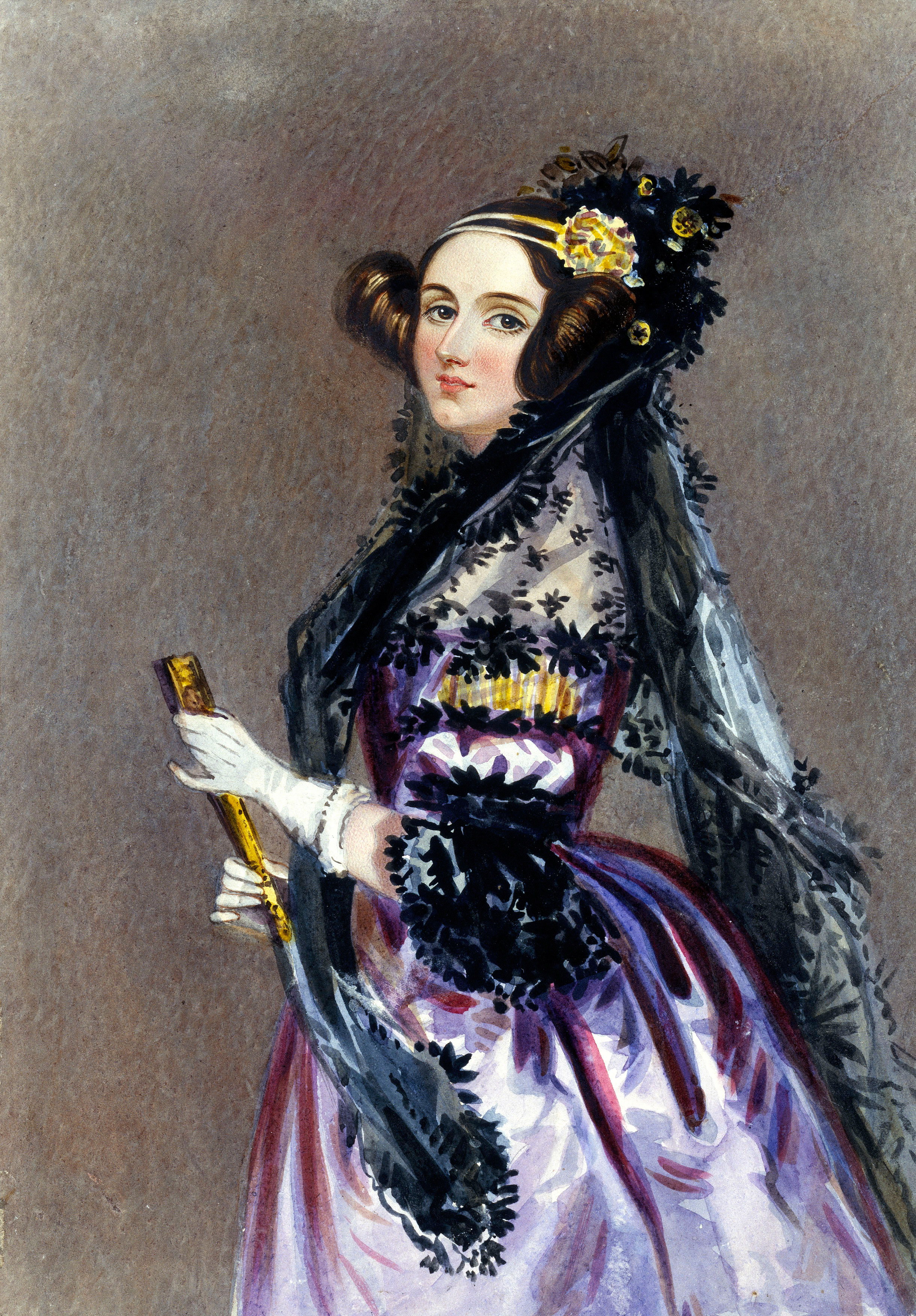
Augusta Ada King-Noel, Countess of Lovelace
An English mathematician and writer who wrote the first computer program.


This week, we finished our Scientist Wanted poster. My scientist was Ada Lovelace, and I think that she’s pretty cool. Ada was born to parents with an unhappy marriage, and her father left her and her mother when she was three months old. Ada’s mother taught her math and science at home, which I think was cool. That type of education was unusual for a little girl in the 1800s, especially one of royal blood. Ada’s friend, Charles Babbage, created the first calculation program, and Ada thought it would be cool if it could do other things, like play music, do more advanced calculations, and many more things. She was describing a computer-before they were invented! I liked that Ada helped to make the calculation program much more advanced, and because of that, she is considered the first computer programmer. I think that it’s interesting that a woman became the very first computer programmer. I was not surprised, however, to hear that she died young of cancer. If she had cancer at that time, she would have died either way. There was no treatment in the 1800s. I like all that Ada Lovelace has done and I think that it’s cool that she’s a scientist.

S&EP: Communicating Information

For the poster turn-in this week, we did a Flipgrid. Flipgrid is where you film yourself talking, and then you post it to the class, so the whole class can see your video. We needed to talk about how our scientist was important and use their proper name. Once we were done, we attached the link to the poster on the video. Once we were done with that, we had to listen to another person’s video who didn’t do our scientist and respond to theirs about something interesting that we learned. I liked this way of communicating the information because it was easier to film yourself rather than present live. I also liked that we could see everyone else’s and respond to their video. I thought that was fun.

XCC: Structure and Function

This week, I noticed a structure and function relationship when my dog was running after me on my way out of the gate. The way his body is built allows him to run fast and not crash into things as he chases after me. If he had a different body, like the body of an owl, he could not run quickly. Owls do not run fast, so if my dog had another body, he couldn’t chase me as quickly.
An animal like a fox also might have a body type that would allow it to run quickly. Animals like cats, pumas, leopards and cheetahs are all built to move quickly. 

Multiplier: Wanderer

This week, I think that I was a wanderer. Another person was doing Ada Lovelace as their scientist, and if I found a good website, I would tell her about it so that she could do better on her project. I would tell her pieces of information that she didn’t know, and I would help her with some tricky requirements.

Sunday, May 20, 2018

Scientist Wanted 5/20


This week in science, we began our scientist wanted poster. We had to choose a scientist from a long list, research the, and create a wanted poster for them. The scientist I chose was Ada Lovelace. I learned a lot about her that I hadn’t known before. Her full name was Augusta Ada King-Noel, Countess of Lovelace, and she was born in 1815. Her parents were Lord George Gordon Byron and Lady Anne Isabella Annabella Milbanke Byron. Ada’s father left her and her mother when she was young, so her strict mother taught her math and science. Ada had an unusual education for a girl in the 1800s. I also learned that her mother made her lay still for long periods of time to teach her self-control.

Through her friend, Charles Babbage, Ada was able to take courses at the University of London. She also helped Babbage with his work: he created a program to do calculations, and Ada helped him make it more advanced. Because of this, Ada was known as being the first computer programmer. Ada also wrote some articles about machinery and was a poet like her father. In 1835, she married William King, who became the first Earl of Lovelace in 1838. This made Ada the Countess of Lovelace. Ada had three children, Anne, Ralph and Byron, and died in 1852 at the age of 36. She was buried next to the father she never knew in Marylebone, UK.

I did not know that Ada Lovelace was also a writer and poet. I also didn’t know that she died so young. I was interested about Ada Lovelace because I knew so little about her. I only knew that she was a computer programmer, considered the first. That was all that I knew about her, and I was very interested by the information that I gathered. I also found out that Ada was an only child and she worked with a lot of people. Charles Dickens even read her a passage of one of his books while Ada was on her deathbed, and she died three months later. I was really interested in this scientist because she seemed interesting to me and I had heard of her before, but I didn’t really know much about her.


SP8: Communicating Information

For this week, we had to choose a scientist, gather info and facts about him/her, and then communicate it to the class and teacher in the form of a WANTED poster. We needed to have one sentence of what they did/do (why they’re wanted), birth date, death date/current age, spouse(s), children, where they can be /could be found, and a paragraph about what they did.

XCC: Cause and Effect
A cause and effect relationship that I noticed was Saturday at my soccer game. I kicked the ball up to a girl on my team, and since I did that, I caused her to score a goal. A way to predict the effect of your kick, you look at where people are located on the field: how close they are to the goal, how many people on the opposite team are near them, how quickly they can move and all possible ways for them to score. You can then choose who to pass the ball to and hopefully you’ll score.

Friday, May 11, 2018

Project Blog


http://www.planitdiy.com/wp-content/uploads/c0d87652151198f7b5cf2ab845269eb2.jpg

This week in class, we were finishing up our disaster proof housing project. We had to choose a natural disaster and a place that suffered from it often, and then we had to design and build a model of a house that could withstand the disaster. Once we turned them in, we would test them, and the tests have very interesting results. My group chose to do flooding in Bangladesh, and I learned that Bangladesh is very close to sea level, meaning that a small storm with lots of rain could flood the area. We had to use materials that were native to our chosen area to plan out the original house that we would build, and we had to write up what we were replacing and what we were replacing it with. Our original design was very interesting. I learned that Bangladesh has lots of iron, which surprised me. I always thought of Bangladesh as a poorer country and that they didn’t have too many house building materials. Not surprising, they have wood, mud and grass, so our original house in real life would be a wooden hut plastered with a mud-and-grass mixture and coated in iron to keep out the water. It would be placed on stilts with a set of steps to get up. Our prototype had wooden walls, was placed on short stilts, and was covered in clean, white duct tape to keep out the water. When we went to test it, our teacher put it in a big plastic tub and poured a big bucket of water over it. Our house successfully kept out all water, but there was one major failure. Our house was not on the bottom of the tub. It was floating on the surface of the water, bobbing around and floating around the tub. I did learn that the house was far too light to stay on the bottom. My group and I were all very sure that in real life, the house would be strong enough to stay on the ground, but we definitely learned to make sure that it was heavy enough to pass the test. 

Backward-looking

-What problems did you encounter while working on this piece? How did you solve them?

When my group and I were working on the house, we came across the fact that we didn’t have our materials. The house was due soon, and we had a lot of things to make the interior furnishings like hot glue, popsicle sticks, duct tape and paint, but we didn’t have the wood to build the house. We were freaking out a little bit, but we finally solved the problem by taking a visit to the Maker Lab and taking some wood from there. We were able to draw out the blueprint on it, and when we met up over the weekend before testing, we were able to get it done.

Inward-looking

-What was particularly satisfying to you about either the process or the piece of work?

I liked how clean our house looked when it was done. We had covered it in shiny, clean white duct tape, which looked very nice and felt incredibly satisfying to me. I also liked (for some odd reason) how the house was floating on the top of the water. That was the reason that we failed, but it felt very happy and satisfying to me.

Outward-looking

-What grade would you give it? Why?

I would give this house a C. I decided on a C because the house didn’t have any water inside of it, which was the major part of it, but the house was not heavy enough to stay on the bottom of the tub and was floating on the top. The house was supposed to stay secured on the bottom and not move from its original position. Ours sadly did, but the major part of not letting the water in succeeded.

Forward-looking

-What's the one thing that you have seen in your classmates' work or process that you would like to try in your next piece?

I saw in multiple of my classmate's houses that they had put on a slanted roof. The water rolled off of their roofs, making their whole house dry inside. They had coated the roof also in duct tape, which helped.


Monday, April 23, 2018

WAC: Should we go nuclear?


Have you ever heard of nuclear energy? Chances are you have. Or at least you’ve heard the word ‘nuclear’. That’s likely. The first thing that probably pops into your mind when you hear the word ‘nuclear’ is a mushroom cloud. A big, giant, ugly, messy explosion. Your second thought is probably toxic waste. Those little caution signs that are shown in movies or pictures that mean nearly nothing except a fictional idea. That isn’t all nuclear energy, true, and nuclear energy isn’t all that. But it isn’t at all a good resource to use. Nuclear energy is a form of energy that doesn’t use fossil fuels or emit greenhouse gases. So it should be good, right? Greenhouse gases are the big thing that causes global warming. So if the power plants don’t let out as much fossil fuels, that should be good, right? Not exactly. There are several problems with nuclear energy, and big ones at that. It’s expensive. Very. It’s radioactive. Very. It’s dangerous. Incredibly. It’s a good source of energy, yes, and mostly clean as well, but before you go on and buy it, at least listen to some evidence. You might be intrigued by the idea, or you might not be. Whatever you think. 

Nuclear energy is not a good form of power to use. First reason why: it’s incredibly expensive. According to PBS learning media, nuclear energy is run by uranium, an extremely radioactive element that needs to be mined out of the Earth. NPR says that it is very expensive to keep the nuclear plants open. The government has to pay to get the parts manufactured overseas and shipped to the plant site. If one of the parts breaks in the transport, it costs more money to fix them, or, if necessary, replace them. And nuclear plants are pretty big. If even one little screw was missing, the whole thing could blow. Besides, once the uranium is used, the toxic waste must be stored in heavy metal caskets and sealed underground-which costs more money. Once that is kept underground for thousands of years, the waste will begin to lose radioactivity and will be able to be recycled, but it’s still very expensive to keep it locked away (and to find places to lock it). More and more people are realizing the dangers of using nuclear energy and have stopped using it, causing the people who work at the nuclear plants to lose their jobs. Even if the plants are supposed to remain open, more and more are being forced to close. The nuclear power comes from little pellets of uranium and plutonium that can generate more energy than a ton of coal. This should be good, since nobody wants to burn coal, but uranium is very expensive to mine. And plutonium. And both of those elements are very radioactive and extremely dangerous. So that’s just one reason why nuclear energy is not the right choice. 

We should avoid using nuclear energy because it itself and the elements that make it up are extremely radioactive and extremely dangerous. The little pellets that are used to bring power to big buildings and homes are made up of two elements, uranium and plutonium. Plutonium is so dangerous, that, as stated by this YouTube video on nuclear energy, “one milligram could kill you.” So plutonium in itself is a very dangerous substance, but, to make matters worse, nuclear energy uses uranium as well. Uranium is an element that needs to be mined out of the ground, and the workers who mine it and handle the uranium should be a bit worried. According to KQED Science, mining uranium and cleaning up after toxic spills increases the risk of thyroid cancer and leukemia not just among the workers and cleanup teams but to the people living near and around the spill sites. Besides, nuclear energy and these little pellets are used to make nuclear weapons. The YouTube video mentions that some countries gave others some nuclear technology for peace and the receiving countries made weapons out of them. As mentioned early on in the video, a nuclear test bomb drop in 1944 (WWII) caused two huge cities to be destroyed with only two nuclear bombs. After that, nuclear power was meant to generate large amounts of energy, but people couldn’t help but think that it was always connected with nuclear weapons.

Some people may argue that nuclear energy is the right choice. There are a few good reasons why nuclear energy is good, but there are more reasons to why it’s bad. The YouTube video 3 Reasons Why Nuclear Energy Is Awesome states, “Countless cases of cancer and lung disease or accidents in coal mines have been avoided because of nuclear power.” It also states that many people might have the wrong idea about nuclear power because big accidents caused by nuclear spills will stick in your mind and be all of the news, but coal and oil (and other fossil fuels) kill people without anybody sticking it on the press, so generally, we tend to think that nuclear is bad just because we don’t hear about deaths caused by what we already use. The video also says, “Since 1976, about 64 giga tonnes of greenhouse gas emissions have not been pumped out into the atmosphere thanks to nuclear energy.” Many people believe that if nuclear power doesn’t emit fossil fuels, it’s good. It should be good, but the benefits are not equally balanced with the risks. There are several benefits to using nuclear energy, but they just aren’t enough. Nuclear spills do awful things to beautiful places. Imagine that you lived in a small town just a mile from the ocean. You had the best view, and your world was beautiful. You had a happy little life with your parents, aunt, cousins and grandparents in a little beach house. One day, some workers came in behind your house a few miles and a few months later, there was a nuclear plant. You aren’t sure about it, but your family tells you not to worry. Later that year, the nuclear plant breaks down, and your area is evacuated. You live in a small, cramped apartment further inland until, five years later, you are allowed to return. But when you get back to your home, nothing is the same. All of the pretty plants have been ripped away, and construction workers have replaced the soil with asphalt. Worst of all, the beach path is roped off because too many toxins found their way into the water. And that isn’t it. Your grandparents, strong and healthy people, didn’t make it out in time. Your little baby cousin is very sick with a deadly lung disease that could be the end of her. This sort of thing is real. Areas and environments can be destroyed by these devastating effects of nuclear energy. Humans and animals, babies, elderly and middle-aged alike are all harmed but these effects. Sure, it powers your house good. Who cares? If my family were going to die, I’d rather not have a working electrical panel.

Nuclear energy isn’t just the bad thing. It’s awful. It destroys ecosystems on land and in the seas (if the waste can find a way to get there) and kills thousands of people and animals. This is more than just the power going out for a few days. This kind of thing is real. It can actually happen. And it did, Friday, March 11, 2011, in Fukushima, Japan. NPR tells about this devastating accident and all of the destruction that followed. The World Nuclear Association says, “Following a major earthquake, a 15-metre tsunami disabled the power supply and cooling of three Fukushima Daiichi reactors, causing a nuclear accident on 11 March 2011. All three cores largely melted in the first three days.” This is just one example of how devastating the effects of nuclear spills can be. Though the 9.0 earthquake and the 15-meter tsunami were not Japan’s fault, the unstable reactors were. And though the technical cause of the explosion was nature, it is still our fault for not making the reactors strong enough. And what’s worse, that happened in 2011, nearly seven years ago, and people are still relocated; cleanup crews are still cleaning up. And this is all because we figured out how to make and use an incredibly dangerous type of energy that should not be used.

Nuclear energy should not be used. It’s bad, it’s dangerous, and it hurts more lives than it saves. We shouldn’t want to use this dangerous form of radioactive death, but some people just like to argue for the other position. Nuclear energy is a dangerous thing that harms countless people. Even if the plant never did have a spill, there are still potential dangers that we face because of it. Mining the uranium and plutonium to make the power pellets is a dangerous thing to do that can cause harmful diseases. And with the toxic waste that is still the product of the process needing to be locked away for thousands of years to lose its radioactivity and be recycled, people still face dangers and problems. The waste does need to be concealed away, but humans are running out of places to put it. With toxic waste being formed regularly, we’ll soon run out of places to put it. And like the Fukushima accident, the toxins can find their way into the waters and soils and contaminate them. Even now, there are 9 million bags of contaminated soil that do not have a place to become clean. The water is still contaminated, and with our recent water problems, this is one of the worst things that could happen. Solar and wind energy is indeed the way to go, but lots of people argue (and are correct) that solar and wind energy are not strong enough to power the many things that we need them to. But there is a way to fix that problem. If we made our roadways solar, we might have enough energy from that to power the world. Solar power is clean, so that’s a major plus. The benefits outweigh the risks. But this particular idea does have a few problems with it. The problem is that it’s also going to be humongously expensive, btu at least it won’t damage the Earth. And that would be a mighty fine way to fix our problem. Then we wouldn’t have to go nuclear at all.

Saturday, April 21, 2018

Nuclear Energy


This week in class, we have been learning about nuclear energy. We have to write an essay on the benefits and disadvantages of using nuclear energy. It isn’t all bad, but I’m saying that I’m against it because, based on the articles that I’ve read to prepare, nuclear energy isn’t such a god choice.

I did learn that nuclear power plants don’t use any fossil fuels and don’t emit greenhouse gases. And that one little uranium pellet (which is what makes the energy work) makes more energy than a ton of coal.

Even though nuclear power is the most energy efficient, it isn’t all benefits. In 2011, Fukushima, Japan suffered through an earthquake and a 15-meter tsunami before the reactors in a nearby power plant exploded, spilling toxic waste all over the nearby areas with tons of damage, meaning that people are still cleaning up after it today. There are 9 million bags of contaminated topsoil that have no place to be stored. It is crucial that nuclear waste be packed away somewhere so that, over time, it can lose its radioactivity and become less dangerous. Groundwater is dripping from the mountains and through the site, carrying poison into the ocean with it, contaminating the water and harming marine life.

This is not all. Nuclear energy is very expensive. I takes lots of money to mine the uranium and plutonium to make the pellets for energy, and if there are any repairs that need to be made to the plant, they must be fixed, and that costs money as well. In fact, more and more plants are closing because people are realizing the expenses and have stopped using it. Nuclear energy is too risky to use.

S&EP: SP6, Constructing explanations and designing solutions

This week we began to construct our essay telling people that nuclear energy was bad or good and why. I learned a lot about nuclear energy, and I think that it is very harmful. It should not be used in homes and other places r to power buildings. In fact, nuclear technology that is used to power homes is used to make nuclear weapons. I don’t like the fact that in the future weapon technology might be powering my house. My teacher, my friends and I also came up with ideas for solutions. Solar and wind energy are clean sources of energy, but there is no way that we can make them our only sources of power. If we made our roadways solar, that might be enough to power the world. Of course, it would be very expensive, but it’s a good enough idea for right now.

XCC: Cause and Effect

A cause and effect relationship is where something happens and causes something else to happen. For example: it rains, which causes it to flood. Someone takes the pancake at the bottom of the huge stack, which causes the huge stack to fall. In this case, and earthquake and tsunami happened, causing nuclear reactors to explode and spray toxic chemicals around. Nuclear reactors exploded and sprayed toxic chemicals around, causing thousands of people to relocate, die or become deathy ill.

Saturday, April 14, 2018

High Adventure Science 4/14


http://www.nasa.gov/centers/goddard/images/content/638831main_globe_east_2048.jpg

This week in class, we have been working on HAS. HAS stands for High Adventure Science. We have 5 modules to work on, ana this week we have completed 4 of them. I have learned a lot about climate change and this that cause or help it.

Module 1: Earth’s changing climates

In this module, we have explored some climate change data of the climates through the decades 1884-2012. It was quite an interesting video that shows how the global heat has changed as humans grow more experienced.


The light blue areas are colder areas; dark blue very cold. The orange is a mild warmth, and the dark orange to crimson is incredibly hot. Believe it or not, in the past 50 years, the area that has had the most change in temperature is the Arctic and Antarctic. The areas where it is the coldest becomes the warmest.


This graph shows the temperature change from 1880-2010.Each point on the graph is an average for the 12 months preceding it. It shows the temperature of the oceans, and for the most part, they have been getting hotter. Occasionally, the ocean temperature will drop, but mostly it is rising, which could pose huge problems for marine life.

This graph also shows the global temperature, but it has a slight more detail. The black points show the same data that the previous graph showed.The red line shows the 5 year average. The two lines, red and black, are not following each other because the black line is a little bit more detailed. The black line shows the yearly average of the ocean temperatures, whereas the red line shows the 5 year average, which would prove to be slightly different. Mostly they are following each other, but there are some slight differences.

The green bars on the graph show how unsure scientists are about the data. The longer they are, the more unsure they are. The reason that the green error bar near the 1880s is longer than the one in the 2000s is because back in the 1880s, scientists did not have the technology and data machines that they have today. It would make sense that they were very unsure, because they had no technology to make sure. In the 2000s, they still didn’t have as much as today, but they had more than they had in the 1880s, which would explain why they are slightly more sure.


Scientists have obtained the previous data using thermometers, which is slightly easier than trying to collect temperatures and data before it was even invented! The picture shows a 19 cm long section of an ice core from a Greenland ice sheet. Scientists examine the layers in the ice cores to try and predict the temperatures of the times back when the ice core was being formed. The winter layers are darker than the summer layers are because in the winter, the ice had a chance to freeze more thoroughly than in the summer.

This graph proves that over the past 10,000 years, the temperature has been slowly increasing. It is getting slightly warmer than before. Based on these graphs, scientists can infer that global warming is happening, but they still do not have enough data to know for sure what is going on.
Module 2: Interactions within the atmosphere

In this module, we began to learn about the effects of solar and infrared radiation on the Earth’s surface and atmosphere.


This was the interactive that we used for the first part of module 2. This shows the heat (red), carbon dioxide (green), and the infrared and solar radiation (yellow and purple arrows).


However, if you click the ‘Erupt’ button on the model, the volcano releases lots of the green carbon dioxide into the air. After clicking erupt about 10-15 times, this is what the model looks like.

The sunlight bounces off of the ground and rebounds back into the atmosphere. Sometimes it is absorbed into the ground and moves around underground.

When carbon dioxide is released into the atmosphere, it warms it up. This is because carbon dioxide is a greenhouse gas. When the solar radiation penetrates the atmosphere, the greenhouse gases trap the light and the warmth from the sun inside the atmosphere. This makes the air around us and everything in the atmosphere a lot warmer.

Next we studied radiation-gas interactions. In this part of module 2, we had four models to choose from: sun on the ground, sun on CO2, infrared on CO2, and sun on ground and CO2.

In sun on the ground, the sunlight that came out of the sun hit the ground and bounced up. Occasionally, there were some infrared radiation waves coming up as well.


In sun on CO2, the sunlight heated the carbon dioxide molecules, which made the temperature (located on the right side of the screenshots) rise faster.


In infrared on CO2, the infrared radiation waves made the carbon dioxide heat much faster, and the temperature rose up a ton.


In sun on ground and CO2, the temperature rose a lot faster because the solar and infrared radiation are heating the ground and the carbon dioxide, increasing the temperature faster.


Module 3: Sources, sinks and feedback


This shows the carbon cycle. The sinks are any area that take in carbon. The atmosphere, land, ocean and sediments are all sinks because they all take in carbon. Reservoirs are where the carbon is stored. Like all matter on Earth, carbon is neither created or destroyed, only recycled.

In this module, we learned about carbon’s solubility, which is how easily it dissolves in different temperatures of water. For carbon, the colder the water, the quicker it dissolves.

Positive feedback is something that is like a cycle. You study for a test, so you get a good grade. The good grade motivates you to study more, so the more you study, the better grades you get. Example by HAS.

Module 4: Feedbacks of ice and clouds

The amount of ice coverage matters, as we found out in the next module. In the model we used, if we put no ice coverage, than the water and atmosphere grew very hot. If we put 100% ice coverage, then the radiation bounces off of it and back into space, cooling the atmosphere.


You can feel the difference between a cloudy day and a sunny day. When there are clouds around, the radiation actually mostly never makes it through the cloud cover and bounces back into space, cooing the atmosphere dramatically.


If there were cloudy days all the time, global warming would probably stop. It might not be fixed, but clouds sure are a good thing so far.

S&EP: SP2: Using Models

This week, we certainly used a lot of models! All of the previous screenshots in my summary are all shots of the models that we have used. There were actually more than this, but I only added a few. These models are very helpful to help us see the physical things that HAS was trying to teach us. In the modules, depending on the models, there were some graphs that showed temperature, water vapor levels, carbon dioxide levels in atmosphere and ocean, and some more. These graphs I found very helpful. But some of the models were less accurate. In the article we read on HAS, it said that clouds deflect radiation better based on their altitude. In the model, we could not place the clouds at the height we wanted. That I found unhelpful.

XCC: Scale, Proportion, and Quantity.

When we are looking at the models, like the volcano from module one, it matters the quantity of the carbon dioxide. When the model started, the amount of carbon dioxide was in proportion to everything else, so the graph was balanced out. But when we clicked ‘Erupt’, more carbon dioxide was released into the air, make the graphs non-proportional. This means that the quantity matters.

Is There Life in Space? 5/23/19

Link  by NASA Solar System Exploration       We all know the typical sci-fi movie where an alien monster drops out of some unknown pl...